Report an issue
Tell us what's wrong and we'll take a look.
Thanks – we got it. We'll review and follow up if needed.
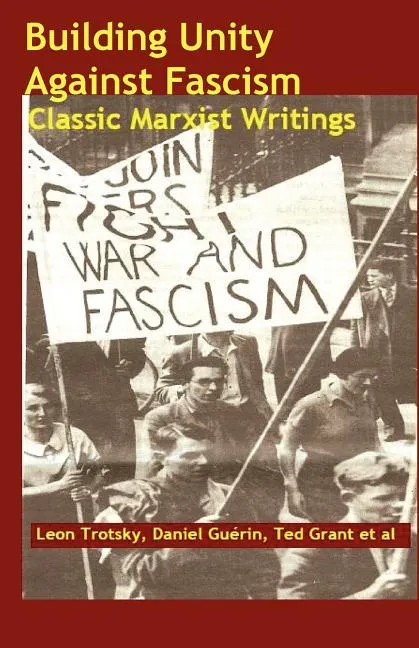
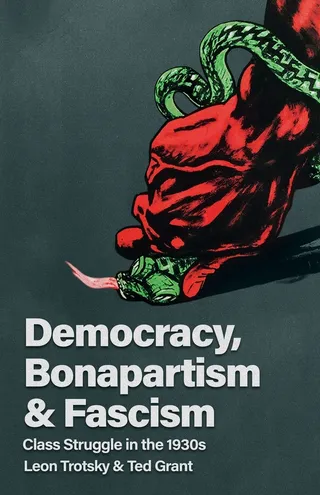
In 2007, French fascist Le Pen won almost four million votes. In 2009 the British National Party won almost a million votes while Germany's fascist NPD won over 750,000. In 2010, fascist-led organisations like the Engish Defence League and Italy's Future and Freedom party emerged. To help activists understand this twenty-first century wave of fascism, this book gathers together the most important analyses from the 20th century. In "Building unity against fascism" you can read: * German socialist Clara Zetkin, Bolshevik leader Karl Radek and Italian communist Antonio Gramsci on the birth on fascism in the early 1920s * Leon Trotsky's article, including "Fascism: What It Is and How To Fight It", explaining why neither capitalist nor Stalinist parties were able to stop fascism in Italy, Germany and Spain in the 1930s. * Maurice Spector's detailed analysis of German fascism in power * Daniel Guérin's 1939 "Fascism and Big Business" and his 1945 preface to its French edition * Ted Grant's booklet, "The Menace of Fascism", which discussed British fascism, the second World War and the Jewish community in Britain * Analysis by Felix Morrow, James P Cannon and Farrell Dobbs of the rise and fall of fascist organisations in the USA in the 20th century.




Daniel Guérin
Daniel Guérin (1904-1988) was a prominent member of the French left for half a century, and arguably one of the most original and most interesting. One of the first on the left to attach central importance to the struggle against colonialism, he became one of the best-known figures in anticolonial campaigns throughout the 1950s and '60s. He was also one of the first in France to warn of the rising dangers of fascism, publishing The Brown Plague in 1933 and Fascism and Big Business in 1936. He met Leon Trotsky in 1933, and would work with the Trotskyist resistance during the war; a respected member of the Fourth International during the 1940s, he was a close, personal friend of Michel Raptis (alias Pablo) until his death. His controversial, libertarian Marxist interpretation of the French Revolution, Class Struggle in the First Republic, 1793-1797 (1945, 2nd ed. 1968) was judged by his friend C.L.R. James to be "one of the great theoretical landmarks of our movement" and by Sartre to be "one of the only contributions by contemporary Marxists to have enriched historical studies." Increasingly critical of what he saw as the authoritarianism inherent in Leninism, he influenced a generation of activists with his "rehabilitation" of anarchism through his Anarchism and the anthology No Gods, No Masters, before playing a role in the resurgence of interest in Rosa Luxemburg and becoming better known for his attempts to promote a "synthesis" of Marxism and anarchism. He was also regarded by 1968 as the grandfather of the gay liberation movement in France and in the 1970s as a leading light in antimilitarist campaigns. His writings have been repeatedly republished both in French and in translation.
More by Daniel Guérin


Why Readwise Books?
Readwise Books is an ebook & audiobook platform that automatically logs how much you and your friends read, making it fun and easy to read more. Learn more →