Report an issue
Tell us what's wrong and we'll take a look.
Thanks – we got it. We'll review and follow up if needed.
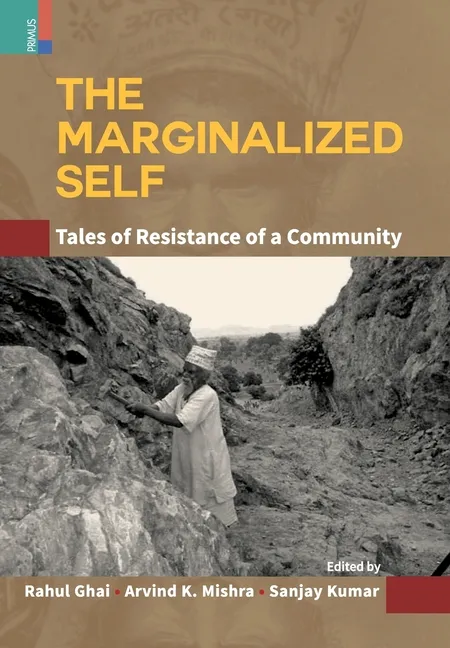
The Marginalized Self questions the century-old perception of the Musahar community as rat-eating, pig-rearing, habitually drunk, lazy and unmotivated; a perception fostered by the dominant discourse of development, and the historically prevalent hierarchical social system. This collection of essays argues that these victims of the dominant model of development acquire a different kind of power and critical consciousness due to their marginality, which helps them to examine the processes, practices, and institutions that give rise to and justify poverty, displacement, corruption, greed, competition, and violence in the name of development.
Ethnographic studies focussing on the Musahars have demonstrated that the people of this community are capable of offering resistance to the might of the development regime in terms of a comparative critique of modern civilization. They can assert the value of their own worldview and epistemology, and in doing so, they subvert the superiority that is generally assigned to the logical and formal schema in understanding the world, and which often speaks in contradictory, evasive, ambiguous, and metaphorical terms.
The book offers insights into marginality, culture, and development in India, and will be of interest to students, scholars, practitioners and policy-makers associated with the disciplines of development studies, social work, social anthropology, critical social psychology, history, and public policy.


Why Readwise Books?
Readwise Books is an ebook & audiobook platform that automatically logs how much you and your friends read, making it fun and easy to read more. Learn more →