Report an issue
Tell us what's wrong and we'll take a look.
Thanks – we got it. We'll review and follow up if needed.
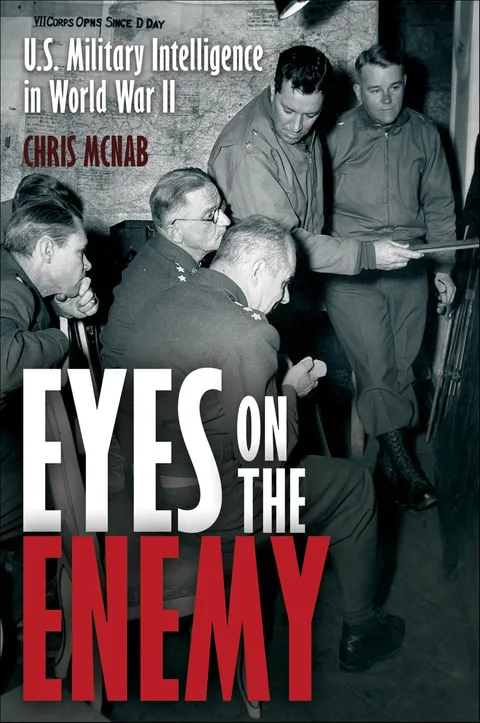
"...a comprehensive reprint of the Intelligence doctrine that supported the American drive to victory on numerous fronts against a wide range of enemies and environments. It is worth the read to reinforce the basics of what we still do today." — The Vanguard: Journal of the Military Intelligence Corps Association On December 7, 1941, an imperial Japanese carrier strike force attacked the US Pacific Fleet at Pearl Harbor, taking advantage of what was one of the most profound intelligence failures in US history. Galvanized into action, the branches of the U.S. military subsequently developed one of the greatest, albeit imperfect, intelligence-gathering and analysis networks of the combatant nations, opening an invaluable window onto the intentions of their enemies. The picture of U.S. military intelligence during World War II is a complex one. It was divided between the fields of signal intelligence (SIGINT) and human intelligence (HUMINT), combat intelligence and War Department intelligence, and between numerous different organizations, including the Military Intelligence Division (MID), Military Intelligence Service (MIS), the Office of Naval Intelligence (ONI), the Counter Intelligence Corps (CIC), the Office of Strategic Services (OSS) and the many intelligence units organic to Army, Navy, Army Air Forces, and Marine Corps. The documents collected in this book reveal the theoretical and practical principles behind wartime intelligence gathering and analysis, from the frontline intelligence officer to the Washington-based code-breaker. They explain fundamentals such as how to observe and record enemy activity and intercept enemy radio traffic, through to specialist activities such as cryptanalysis, photoreconnaissance, prisoner interrogation, and undercover agent operations. The painstaking work of an intelligence operator required a sharp, attentive mind, whether working behind a desk or under fire on the frontlines. The outputs from these men and women could ultimately make the difference between victory and defeat in battle.
Chris McNab
Dr Chris McNab is an author and historian, his principal subject areas being military history and military technology. He has written more than 100 non-fiction titles, including many Casemate pocket manuals relating to World War I, World War II, and the Vietnam War. Chris has appeared in several TV documentaries as an expert commentator, and he also works as an educational consultant, specializing in the development of textbooks and teaching materials.
More by Chris McNab








Why Readwise Books?
Readwise Books is an ebook & audiobook platform that automatically logs how much you and your friends read, making it fun and easy to read more. Learn more →