Report an issue
Tell us what's wrong and we'll take a look.
Thanks – we got it. We'll review and follow up if needed.
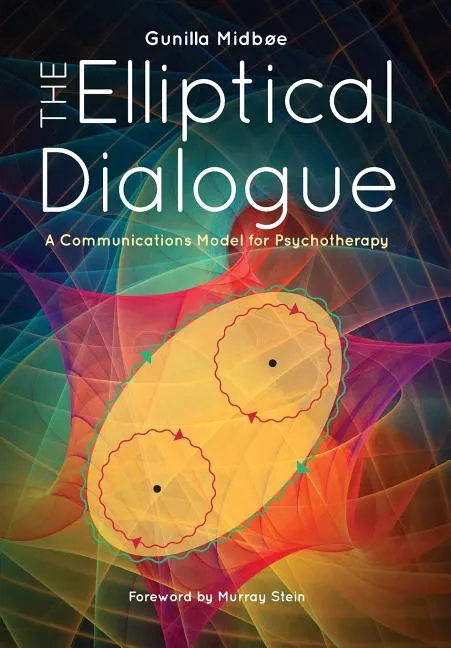
The Elliptical Dialogue is presented in this book as a model for communication, dialogue and reciprocal relationship in analytical work, psychotherapy and supervision. The book also suggests new clinical and theoretical perspectives for analytical psychology by integrating systems theory from Gregory Bateson and language theory from Ludwig Wittgenstein.
In analytical work as well as in everyday life the essence of human existence sometimes shows itself as unguarded moments of mutual meeting. They cross time and space and become everlasting experiences. Such a moment opened up for Gregory Bateson when he met C G Jung's poetic text Septem Sermones ad Mortuos. The connection between Bateson and Jung's view on mind and matter is carefully elaborated in the text. In interaction with Wittgenstein's view of the deep architecture of nonverbal and verbal language the Elliptical Dialogue points toward an integrated perspective for clinical use both in analytical work and supervision.
Jungian psychoanalysts, psychotherapists and experienced clinicians, supervisors and students as well as the general public interested in analytical psychology, I hope, will be able to catch the deeper sense of powerful creative energy of elliptical dialogues in personal and professional life.
Jungian psychoanalysts, psychotherapists and experienced clinicians, supervisors and students as well as the general public interested in analytical psychology, will be able to catch the deeper sense of powerful creative energy of elliptical dialogues in personal and professional life.
Table of Contents:
PART I: THE ELLIPTICAL DIALOGUE
1. The elliptical dialogue as a map for Jungian psychoanalysis
2. The elliptical dialogue as a map for Jungian supervision
3. The elliptical dialogue and its limitations
PART II: THE ELLIPTICAL DIALOGUE AND TRANSFORMATION IN JUNGIAN PSYCHOANALYSIS -- THE CLINICAL PART
4. The elliptical dialogue and individuation
5. Symbol as transformation
6. Language as transformation
7. Active imagination as transformation
PART III: THREE THEORIES IN THE ELLIPTICAL DIALOGUE -- THE SYNTHESISING, INTEGRATIVE PART
8. The connecting web - a kind of fishing net
9. Systems theory -- Bateson's contribution and some conclusions for dialogue with today's analytical psychology.
10. Language theory -- Wittgenstein's contribution and how dialogue is used in analytical psychology
11. Analytical psychology -- Jung's contribution to the elliptical dialogue
12. The Elliptical Dialogue as a Communications Model for Psychotherapy
REFERENCES
INDEX
Gunilla Midbøe
Gunilla Midbøe, MSW., certified psychotherapist, supervisor and Jungian psychoanalyst, works in private practice in the western parts of Sweden. She is a board member of the Jungian Foundation in Sweden, editor for the net journal Coniunctio and a board member of the Danish Society of Analytical Psychology, as well as a member of DSAP's training committee. She has presented clinical papers at IAAP conferences in Vilnius, St Petersburg and congress in Kyoto, written articles and lectures within the field of analytical psychology. Her main spheres of interest include how symbols and language interact and contributes to individuation within the analytical relationship and the development of contemporary analytical psychology. Visit her website at www.gunillamidboe.se.


Why Readwise Books?
Readwise Books is an ebook & audiobook platform that automatically logs how much you and your friends read, making it fun and easy to read more. Learn more →