Report an issue
Tell us what's wrong and we'll take a look.
Thanks – we got it. We'll review and follow up if needed.
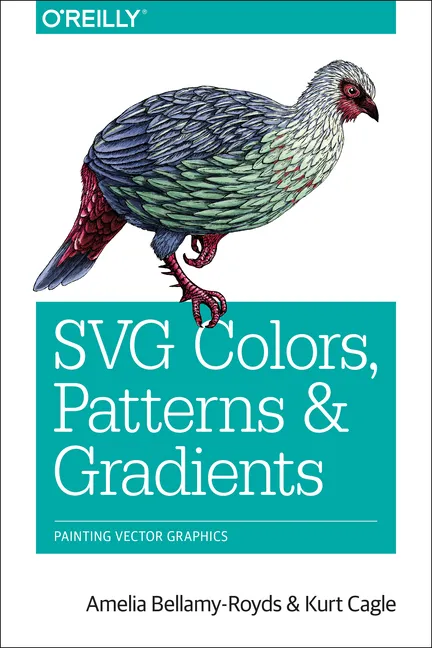
As a vector graphics format, SVG uses precisely-defined geometric shapes to build an image. But that doesn't mean that SVG graphics have to look like technical drawings. SVG graphics can be shaded, textured, built from partially-transparent overlapping layers, or even filled with photographic images.
SVG Colors, Patterns, and Gradients takes an in-depth look at the different ways SVG text and shapes can be painted on the screen or page. Youâ ll start with an overview of how color is defined, including the various ways you can control the transparency of SVG content. Youâ ll then dive deep into the concept of an SVG paint server: gradients, patterns, and other complex graphical content that can be used to fill-in or outline other SVG shapes and text.
Amelia Bellamy-Royds
Amelia Bellamy-Royds is a freelance writer specializing in scientific and technical communication. She helps promote web standards and design through participation in online communities such as Web Platform Docs, Stack Exchange and Codepen. Her interest in SVG stems from work in data visualization, and builds upon the programming fundamentals she learned while earning a B.Sc. in bioinformatics. A policy research job for the Canadian Library of Parliament convinced her that she was more interested in discussing the big-picture applications of scientific research than doing the laboratory work herself, leading to graduate studies in journalism. She currently lives in Edmonton, Alberta. If she isn't at a computer, she's probably digging in her vegetable garden or out enjoying live music.
More by Amelia Bellamy-Royds





Why Readwise Books?
Readwise Books is an ebook & audiobook platform that automatically logs how much you and your friends read, making it fun and easy to read more. Learn more →