
Report an issue
Tell us what's wrong and we'll take a look.
Thanks – we got it. We'll review and follow up if needed.
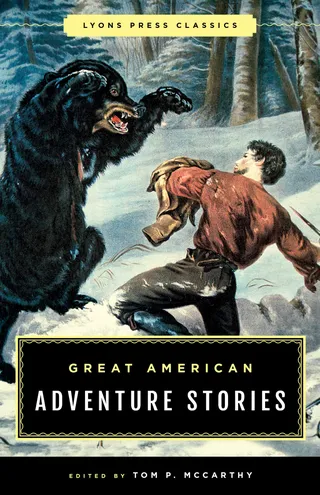
Few people would want to test their mettle in an ice-encrusted boat with an Arctic explorer, sail the Straits of Magellan with Joshua Slocum, or watch with Owen Chase as an angry whale sends his ship to the bottom, thousands of miles from the nearest land. But it's quite another thing to read these true accounts while settled into a favorite chair.
Slocum and Chase persevered in the face of travails that would have given Job pause. Their stoic accounts are stronger and more dramatic for their total lack of affection, their frankness, and their lack of ego. Their gripping stories are custom-made for the imaginative reader who seeks adventure in a more controlled environment, safe and warm, and well fed - civilized readers with their armchairs anchored firmly to the living room floor.
Rich in drama and history, here are stories that will entertain, inform, and inspire--enduring stories that have attracted generations of readers.
Tom McCarthy
Dr. Tom McCarthy, Panthera's Director of Snow Leopard Programs, began his conservation career studying brown bears, black bears, mountain goats and caribou in Alaska in the early 1980s. A strong interest in international conservation led him to Mongolia in 1992, where, under the guidance of Dr. George Schaller (known as "one of the founding fathers of wildlife conservation"), he took over the management of a long-term snow leopard research project. He was the first biologist to use satellite radio-collars on snow leopards. McCarthy became the Science and Conservation Director of the Snow Leopard Trust in 2000 and has since led their extensive science and community-based conservation programs across much of snow leopard range in Asia. From 2002-2009, Dr. McCarthy served as Executive Director of the Snow Leopard Network, a global consortium of more than 200 professionals involved in snow leopard research and conservation. Among other research initiatives, Dr. McCarthy is leading both a range-wide assessment of snow leopard genetics that seeks to identify movement corridors which are critical to maintaining the health and genetic diversity of the species, and a revision of methods by which snow leopard populations can be monitored over time, including such novel non-invasive approaches as fecal genetics, camera trapping and statistical modeling based on sign surveys.
More by Tom McCarthy









Why Readwise Books?
Readwise Books is an ebook & audiobook platform that automatically logs how much you and your friends read, making it fun and easy to read more. Learn more →