Report an issue
Tell us what's wrong and we'll take a look.
Thanks – we got it. We'll review and follow up if needed.
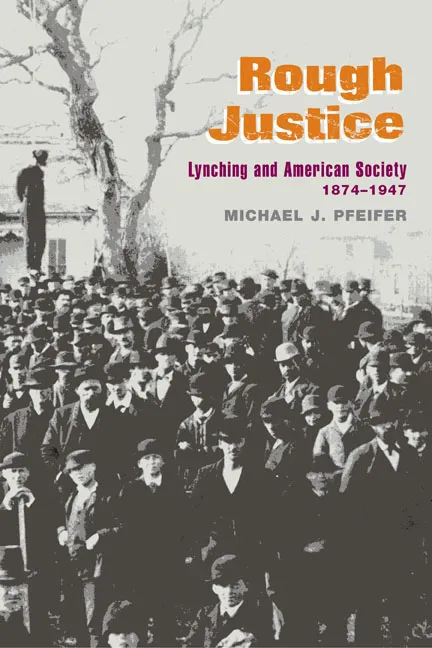
The history of lynching's transformation from collective, popular violence to state_sanctioned, sanitized execution
In this first national, cross-regional study of lynching and criminal justice, now in paperback, Michael J. Pfeifer investigates the pervasive and persistent commitment to "rough justice" that characterized rural and working class areas of most of the United States in the late nineteenth century.
Defining rough justice as the harsh, informal, and often communal punishment of perceived criminal behavior, Pfeifer examines the influence of race, gender, and class on understandings of criminal justice and shows how they varied across regions. He argues that lynching only ended when "rough justice" enthusiasts compromised with middle-class advocates of due process by revamping the death penalty into an efficient, technocratic, and highly racialized mechanism of retributive justice.
Michael J Pfeifer
Michael J. Pfeifer is Professor of History at the John Jay College of Criminal Justice and the CUNY Graduate Center. He is the author or editor of five books on the history of US and global lynching, including Rough Justice: Lynching and American Society, 1874-1947 and The Roots of Rough Justice: Origins of American Lynching.
More by Michael J Pfeifer


Why Readwise Books?
Readwise Books is an ebook & audiobook platform that automatically logs how much you and your friends read, making it fun and easy to read more. Learn more →