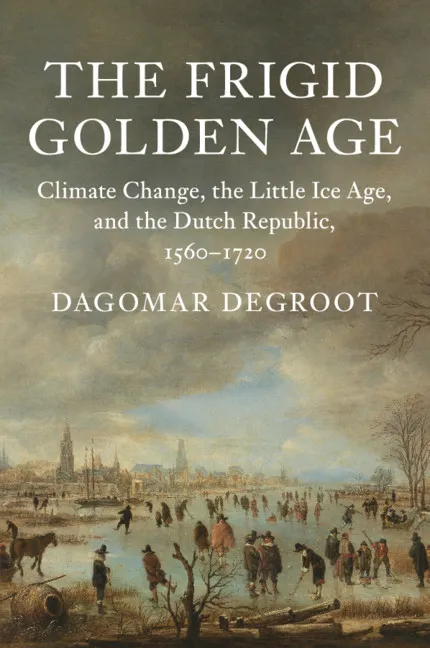
The Frigid Golden Age
Report an issue
Tell us what's wrong and we'll take a look.
Thanks – we got it. We'll review and follow up if needed.
Dagomar Degroot offers the first detailed analysis of how a society thrived amid the Little Ice Age, a period of climatic cooling that reached its chilliest point between the sixteenth and eighteenth centuries. The precocious economy, unusual environment, and dynamic intellectual culture of the Dutch Republic in its seventeenth-century Golden Age allowed it to thrive as neighboring societies unraveled in the face of extremes in temperature and precipitation. By tracing the occasionally counterintuitive manifestations of climate change from global to local scales, Degroot finds that the Little Ice Age presented not only challenges for Dutch citizens but also opportunities that they aggressively exploited in conducting commerce, waging war, and creating culture. The overall success of their Republic in coping with climate change offers lessons that we would be wise to heed today, as we confront the growing crisis of global warming.
Dagomar deGroot
Dagomar Degroot is Associate Professor of Environmental History at Georgetown University. A contributor to the Washington Post, Nature, and Aeon, he is the author of The Frigid Golden Age: Climate Change, the Little Ice Age, and the Dutch Republic, 1560-1720.
More by Dagomar deGroot


Why Readwise Books?
Readwise Books is an ebook & audiobook platform that automatically logs how much you and your friends read, making it fun and easy to read more. Learn more →