Report an issue
Tell us what's wrong and we'll take a look.
Thanks – we got it. We'll review and follow up if needed.
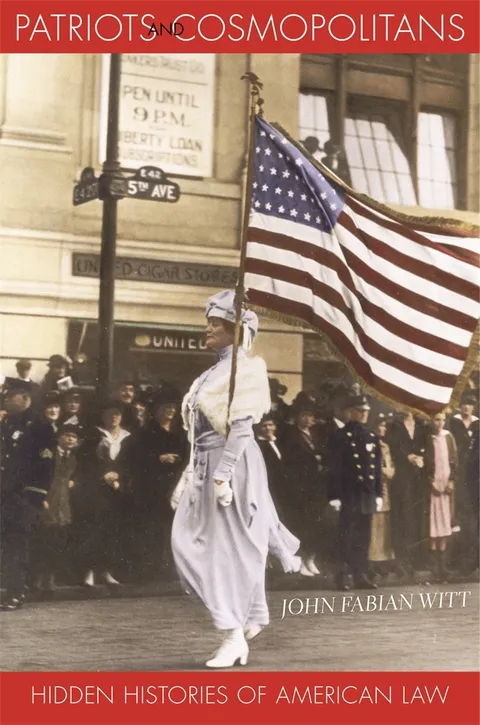
Ranging widely from the founding era to Reconstruction, from the making of the modern state to its post-New Deal limits, John Fabian Witt illuminates the legal and constitutional foundations of American nationhood through the little-known stories of five patriots and critics. He shows how law and constitutionalism have powerfully shaped and been shaped by the experience of nationhood at key moments in American history.
Founding Father James Wilson's star-crossed life is testament to the capacity of American nationhood to capture the imagination of those who have lived within its orbit. For South Carolina freedman Elias Hill, the nineteenth-century saga of black citizenship in the United States gave way to a quest for a black nationhood of his own on the West African coast. Greenwich Village radical Crystal Eastman became one of the most articulate critics of American nationhood, advocating world federation and other forms of supranational government and establishing the modern American civil liberties movement. By contrast, the self-conscious patriotism of Dean Roscoe Pound of Harvard Law School and trial lawyer Melvin Belli aimed to stave off what Pound and Belli saw as the dangerous growth of a foreign administrative state.
In their own way, each of these individuals came up against the power of American national institutions to shape and constrain the directions of legal change. Yet their engagements with American nationhood remade the institutions and ideals of the United States even as the national tradition shaped and constrained the course of their lives.
John Fabian Witt
John Fabian Witt is the Duffy Class of 1960 Professor of Law and History at Yale, where he serves as head of Davenport College. He is the author of the Bancroft Prize-winning Lincoln's Code: The Laws of War in American History.
More by John Fabian Witt






Why Readwise Books?
Readwise Books is an ebook & audiobook platform that automatically logs how much you and your friends read, making it fun and easy to read more. Learn more →