Report an issue
Tell us what's wrong and we'll take a look.
Thanks – we got it. We'll review and follow up if needed.
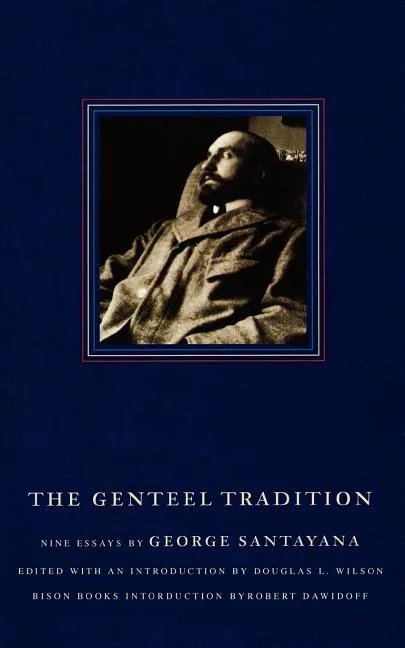
Santayana's address appears in this collection of influential essays about the country he lived in from 1872 to 1912. Because he remained European in spirit, the Spaniard brought a sharp detachment to his observations. He points out the American split between thought and action, theory and practice, the traditional and the modern, the arts and business, the high-brow and the popular. He also examines the excessive moralism in national life, which baffles Europeans. These nine essays touch on American idealism and materialism and American endeavor, sacred and profane.
George Santayana
George Santayana, born Jorge Augustín Nicolás Ruiz de Santayana (1863–1952), was a Spanish-American philosopher, novelist, poet, and essayist. He is best known for his witty aphorisms, especially the phrase, “Those who cannot remember the past are condemned to repeat it.” Santayana was born in Spain, but was raised and educated in the United States. He attended Harvard College and later taught philosophy there. During this time he wrote many of his seminal philosophical works, including The Sense of Beauty, The Life of Reason, and The Realms of Being. In 1912, Santayana moved to Europe, where he devoted his life to writing both fiction and nonfiction.
More by George Santayana



Why Readwise Books?
Readwise Books is an ebook & audiobook platform that automatically logs how much you and your friends read, making it fun and easy to read more. Learn more →