Report an issue
Tell us what's wrong and we'll take a look.
Thanks – we got it. We'll review and follow up if needed.
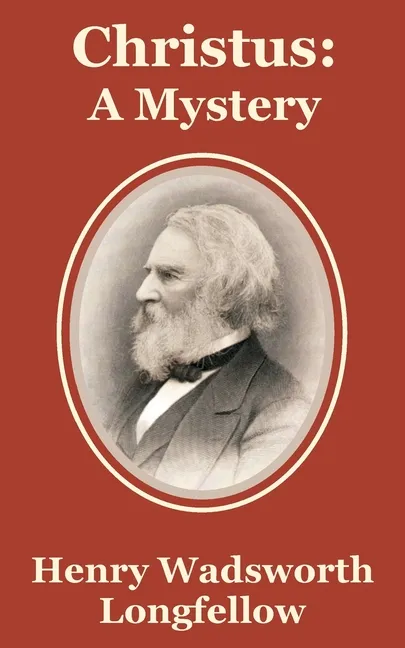
Christus was envisioned by Longfellow as his epoch poetic masterpiece, bringing his religious and historical work together in a coherent, epic form; the three volumes collect The Divine Tragedy, The Golden Legend and The New England Tragedies, adding an "Interlude," a "Finale," and a piece on Martin Luther.
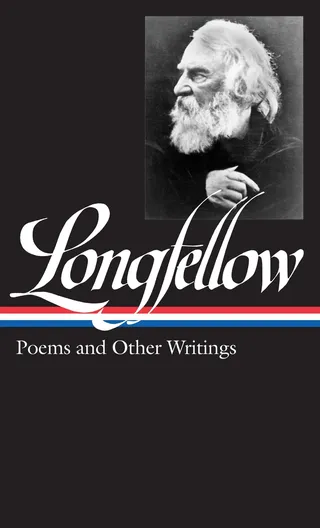
Henry Wadsworth Longfellow
Henry Wadsworth Longfellow (1807-1882) was an American poet. Born in Portland, Maine, Longfellow excelled in reading and writing from a young age, becoming fluent in Latin as an adolescent and publishing his first poem at the age of thirteen. In 1822, Longfellow enrolled at Bowdoin College, where he formed a lifelong friendship with Nathaniel Hawthorne and published poems and stories in local magazines and newspapers. Graduating in 1825, Longfellow was offered a position at Bowdoin as a professor of modern languages before embarking on a journey throughout Europe. He returned home in 1829 to begin teaching and working as the college’s librarian. During this time, he began working as a translator of French, Italian, and Spanish textbooks, eventually publishing a translation of Jorge Manrique, a major Castilian poet of the fifteenth century. In 1836, after a period abroad and the death of his wife Mary, Longfellow accepted a professorship at Harvard, where he taught modern languages while writing the poems that would become Voices of the Night (1839), his debut collection. That same year, Longfellow published Hyperion: A Romance, a novel based partly on his travels and the loss of his wife. In 1843, following a prolonged courtship, Longfellow married Fanny Appleton, with whom he would have six children. That decade proved fortuitous for Longfellow’s life and career, which blossomed with the publication of Evangeline: A Tale of Acadie (1847), an epic poem that earned him a reputation as one of America’s leading writers and allowed him to develop the style that would flourish in The Song of Hiawatha (1855). But tragedy would find him once more. In 1861, an accident led to the death of Fanny and plunged Longfellow into a terrible depression. Although unable to write original poetry for several years after her passing, he began work on the first American translation of Dante’s Divine Comedy and increased his public support of abolitionism. Both steeped in tradition and immensely popular, Longfellow’s poetry continues to be read and revered around the world.
More by Henry Wadsworth Longfellow






Why Readwise Books?
Readwise Books is an ebook & audiobook platform that automatically logs how much you and your friends read, making it fun and easy to read more. Learn more →