Report an issue
Tell us what's wrong and we'll take a look.
Thanks – we got it. We'll review and follow up if needed.
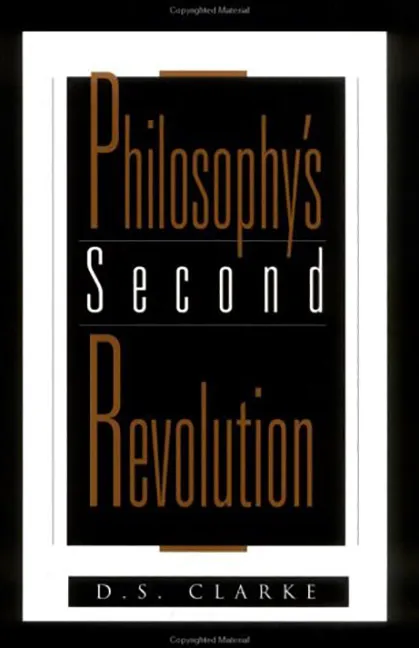
D.S. Clarke explains some of the crucial issues raised by the second philosophical revolution, and especially the differences between the early phase of analytic philosophy, covering roughly the first half of the twentieth century, and the new phase which commenced about 1960.
As Philosophy's Second Revolution surveys the direction of modern philosophy, it is able to combine discussion of cutting-edge topics with an introductory survey of analytic philosophy for those with little background in logic or history of philosophy.
Professor Clarke traces the historical background of the analytic movement from its origins, through its development by applications of logic to philosophical problems and by 'ordinary language' philosophers. He then concentrates on the post-1960 phase, with its rejection of earlier views dominated by Wittgenstein's methods. The new phase features the development of a materialist metaphysics, the attempt to assimilate philosophy to the natural sciences, and the attempt to reinstate normative ethics as a guide to conduct.
Clarke defends the first phase against aspects of the second phase, arguing that contemporary materialism rests on the mistaken view that mental language has fact-stating functions, and that normative ethics imposes on moral reasoning a false intellectualist model.
Clarke
Dr. David Clarke is a Christian psychologist and podcaster and the author or coauthor of more than 20 books, including Kiss Me Like You Mean It and Enough Is Enough. A graduate of Dallas Theological Seminary and Western Conservative Baptist Seminary, he has been in private practice for 35 years. He lives in Florida.
More by Clarke













Why Readwise Books?
Readwise Books is an ebook & audiobook platform that automatically logs how much you and your friends read, making it fun and easy to read more. Learn more →