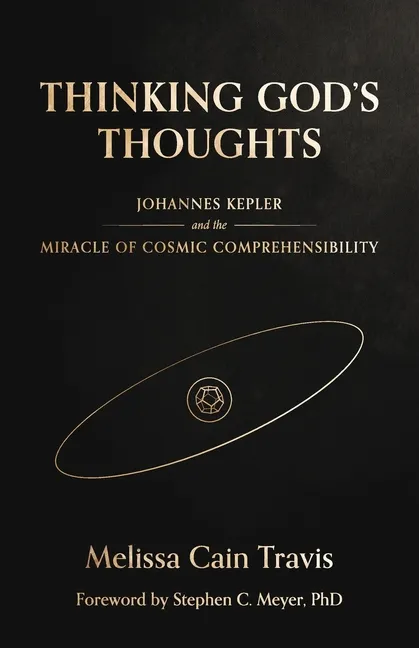
Thinking God's Thoughts
Johannes Kepler and the Miracle of Cosmic Comprehensibility
Report an issue
Tell us what's wrong and we'll take a look.
Thanks – we got it. We'll review and follow up if needed.
Why is the cosmos intellectually accessible to the human mind?
A host of philosophers, theologians, scientists, and mathematicians of the Great Western Tradition have been struck by the uncanny interconnection between three fundamentally distinct domains of reality: nature, mathematics, and the human mind. This resonance has been discussed since antiquity and often attributed to a transcendent rational source of both material and immaterial aspects of reality. Johannes Kepler, a devout Christian who was greatly influenced by this intellectual tradition, was instrumental in transforming classical astronomy into a true celestial physics. He was convinced that a tripartite harmony of archetype, copy, and image explained the interconnections that made his natural philosophy possible-that allowed him to share in God's own thoughts. Rather than being diminished by the past few centuries of scientific progress, Keplerian natural theology is a more robust explanation of cosmic comprehensibility than ever before.
Melissa Cain Travis
Melissa Cain Travis is a professor of apologetics at Houston Baptist University, a contributing writer for Christian Research Journal, and a homeschooling mom. The author of three books in the Young Defenders apologetics storybook series, she is dedicated to exploring the science, theology, and philosophy behind the origins debate.
More by Melissa Cain Travis



Why Readwise Books?
Readwise Books is an ebook & audiobook platform that automatically logs how much you and your friends read, making it fun and easy to read more. Learn more →