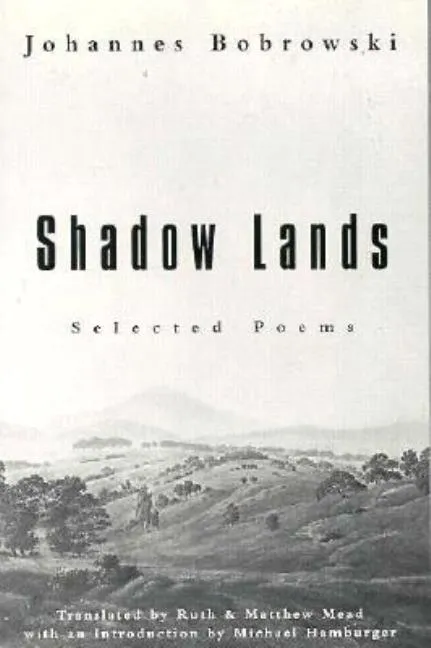
Shadow Lands: Selected Poems
Report an issue
Tell us what's wrong and we'll take a look.
Thanks – we got it. We'll review and follow up if needed.
Johannes Bobrowski is widely regarded as the most important German poet of this century. He began to write poetry on the Eastern Front in 1941 where, as a 24-year-old German soldier in Kaunas, he saw the "slavering wolves" of the SS drive the "grey processions" over a hill to death. A prisoner-of-war in Russia until 1949, he returned to Berlin to write with a purpose: to inform his countrymen of the history and myths of Eastern Europe and to preserve the memory of his childhood home. The poems in Shadow Lands reflect Bobrowski's hope, in the words of Michael Hamburger, "that he might succeed poetically in bearing witness to that vanished world," that is, the world of Eastern Germany before the war. With an almost real lyrical beauty, he evokes the pre-Christian era of the gods and heroes of the ancient Prussians. The poems also resonate with the most eloquent and picturesque descriptions of Bobrowski's homeland--its rivers, its forests and quiet villages--ultimately leaving us with a sense of "the hiddenness of all perfect things."

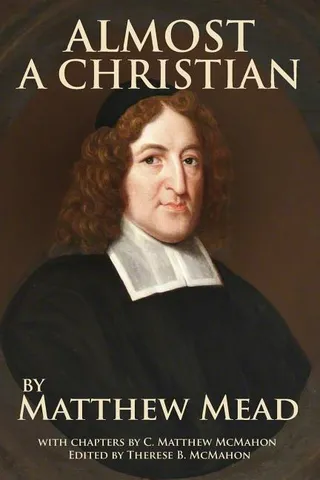
Matthew Mead
Matthew Mead (c. 1629-1699) was an English Puritan and Independent minister known for his deep yet practical preaching. Educated at King's College, Cambridge, he was ejected from his lectureship under the Act of Uniformity of 1662 and continued ministering as a dissenter amid persecution and periods of exile in Holland. In 1671, he became pastor of the Independent congregation at Stepney, which grew to be one of the largest dissenting congregations in London.
More by Matthew Mead



Why Readwise Books?
Readwise Books is an ebook & audiobook platform that automatically logs how much you and your friends read, making it fun and easy to read more. Learn more →