Report an issue
Tell us what's wrong and we'll take a look.
Thanks – we got it. We'll review and follow up if needed.
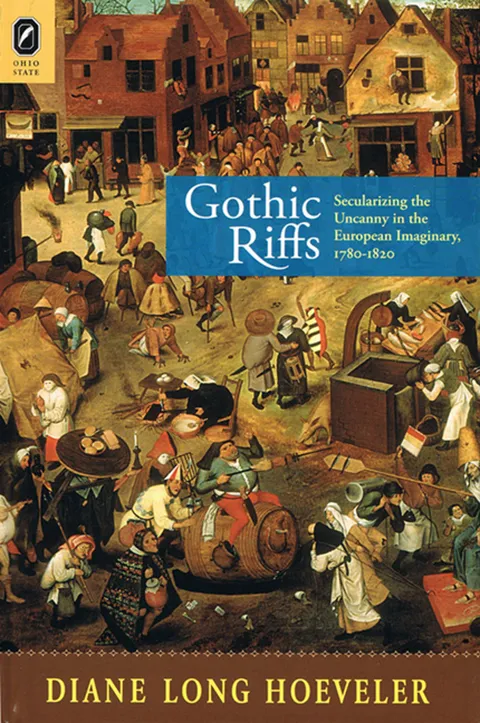
Gothic Riffs: Secularizing the Uncanny in the European Imaginary, 1780-1820 by Diane Long Hoeveler provides the first comprehensive study of what are called "collateral gothic" genres--operas, ballads, chapbooks, dramas, and melodramas--that emerged out of the gothic novel tradition founded by Horace Walpole, Matthew Lewis, and Ann Radcliffe. The role of religion and its more popular manifestations, superstition and magic, in the daily lives of Western Europeans were effectively undercut by the forces of secularization that were gaining momentum on every front, particularly by 1800. It is clear, however, that the lower class and the emerging bourgeoisie were loath to discard their traditional beliefs. We can see their search for a sense of transcendent order and spiritual meaning in the continuing popularity of gothic performances that demonstrate that there was more than a residue of a religious calendar still operating in the public performative realm. Because this bourgeois culture could not turn away from God, it chose to be haunted, in its literature and drama, by God's uncanny avatars: priests, corrupt monks, incestuous fathers and uncles. The gothic aesthetic emerged during this period as an ideologically contradictory and complex discourse system; a secularizing of the uncanny; a way of alternately valorizing and at the same time slandering the realms of the supernatural, the sacred, the maternal, and the primitive.


Why Readwise Books?
Readwise Books is an ebook & audiobook platform that automatically logs how much you and your friends read, making it fun and easy to read more. Learn more →