Report an issue
Tell us what's wrong and we'll take a look.
Thanks – we got it. We'll review and follow up if needed.
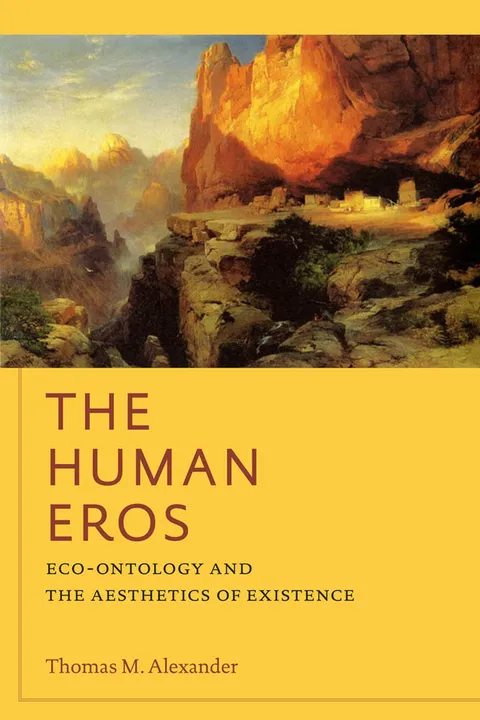
In these philosophical essays, a leading John Dewey scholar presents a new conceptual framework for exploring human experience as it relates to nature. The Human Eros explores themes in classical American philosophy, primarily the thought of John Dewey, but also that of Ralph Waldo Emerson, George Santayana, and Native American traditions. Using these works as a critical base, Thomas M. Alexander suggests that human beings have an inherent need to experience meaning and value, what he calls a "Human Eros." Our various cultures are symbolic environments or "spiritual ecologies" within which the Human Eros seeks to thrive. This is how we inhabit the earth. Encircling and sustaining our cultural existence is nature, yet Western philosophy has not provided adequate conceptual models for thinking ecologically. Alexander introduces the idea of "eco-ontology" to explore ways in which this might be done, beginning with the primacy of Nature over Being but also including the recognition of possibility and potentiality as inherent aspects of existence. He argues for the centrality of Dewey's thought to an effective ecological philosophy. Both "pragmatism" and "naturalism," he shows, need to be contextualized within an emergentist, relational, nonreductive view of nature and an aesthetic, imaginative, nonreductive view of intelligence.
Thomas M Alexander
Thomas M. Alexander is Assistant Professor of Philosophy at Southern Illinois University at Carbondale.


Why Readwise Books?
Readwise Books is an ebook & audiobook platform that automatically logs how much you and your friends read, making it fun and easy to read more. Learn more →