Report an issue
Tell us what's wrong and we'll take a look.
Thanks – we got it. We'll review and follow up if needed.
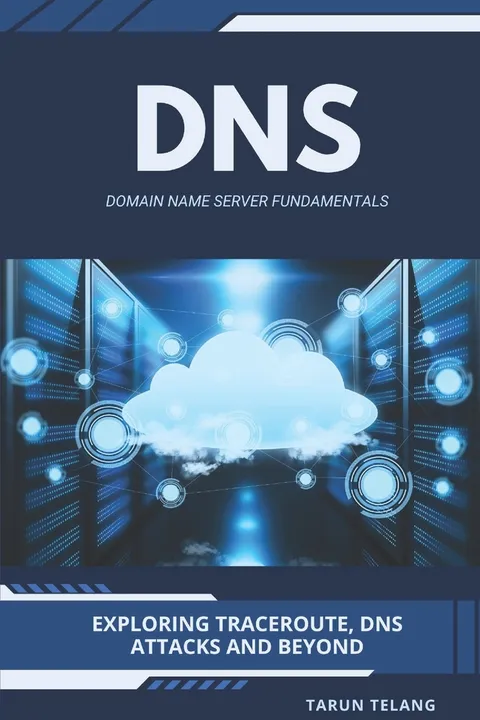
DNS translates human-readable domain names into machine-readable IP addresses. Despite its importance, DNS is one of the most misunderstood components of network infrastructure.
When DNS is not working properly, you can't get access to websites. Incorrect configuration can result in slow loading times and connectivity problems. Hackers can compromise it, leading to serious security breaches and cyberattacks.
"DNS Fundamentals: Exploring Traceroute, DNS Attacks, and Beyond" is your go-to guide for understanding this essential internet protocol.
What You'll LearnThis book takes a practical approach by combining fundamental concepts with real-world diagnostic tools and security considerations for DNS. Here's what it will cover:
DNS Fundamentals- DNS Record Types: Master A, AAAA, CNAME, MX, TXT, NS, PTR, SOA, SRV, and CAA records
- Essential Tools: Learn to use nslookup, dig, and whois commands for DNS troubleshooting
- Practical Applications: Understand how DNS records impact SEO, email campaigns, and website performance
- Zone Files & Configuration: Configure DNS records using industry-standard formats (RFC 1034/1035)
- Traceroute Fundamentals: Understand how packets traverse networks using TTL values
- Diagnostic Techniques: Identify network bottlenecks, routing issues, and performance problems
- Reading Traceroute Output: Interpret hop counts and response times, and identify problem areas
- Cross-Platform Tools: Master both Unix traceroute and Windows tracert commands
- Troubleshooting Strategies: Systematic approaches to network problem resolution
- DNS Redirects: Implement CNAME, URL, permanent (301), and temporary (302) redirects
- External DNS: Leverage public DNS providers for performance and reliability
- DNS Suffixes: Configure search domains and resolution behavior
- Private DNS: Design internal DNS infrastructure for organizational networks
- TTL Management: Optimize caching strategies for performance and flexibility
- Common Attack Vectors: DNS hijacking, cache poisoning, and spoofing techniques
- Threat Identification: Recognize signs of DNS-based attacks and compromises
- Mitigation Strategies: Implement defensive measures and security best practices
- Incident Response: Handle DNS security breaches and recovery procedures
- DNS TTL Optimization: Balance performance, reliability, and change flexibility
- TCP/IP Integration: Understand DNS within the broader network protocol stack
- Domain Registration: Navigate the domain acquisition and management process
- Performance Tuning: Optimize DNS resolution for speed and reliability
Each chapter includes:
- Step-by-step command examples with actual output
- Real-world troubleshooting scenarios
- Best practices from industry experience
- Common pitfalls and how to avoid them
- Additional resources for further learning and development
This book is designed for:
Primary AudienceNetwork administrators, IT professionals, system engineers
Secondary AudienceStudents, technology enthusiasts, CompTIA certification candidates
Experience LevelBeginner to intermediate (accessible to all levels)
New York Best Seller recognition as one of the best DNS books according to BookAuthority.org





Why Readwise Books?
Readwise Books is an ebook & audiobook platform that automatically logs how much you and your friends read, making it fun and easy to read more. Learn more →