Report an issue
Tell us what's wrong and we'll take a look.
Thanks – we got it. We'll review and follow up if needed.
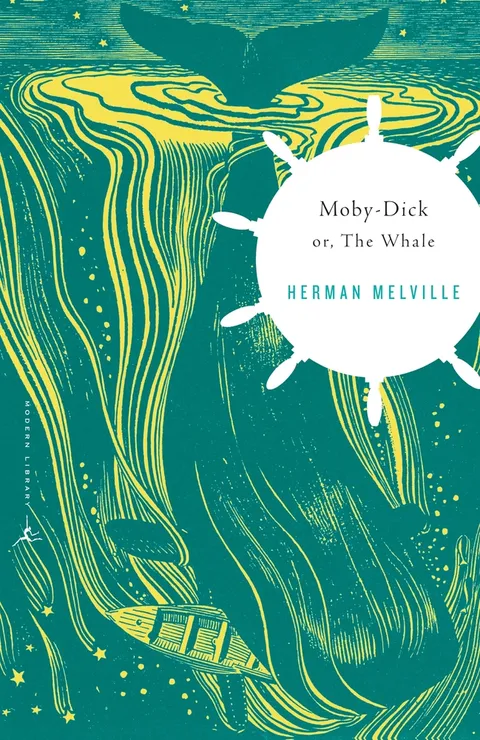
Introduction by Elizabeth Hardwick
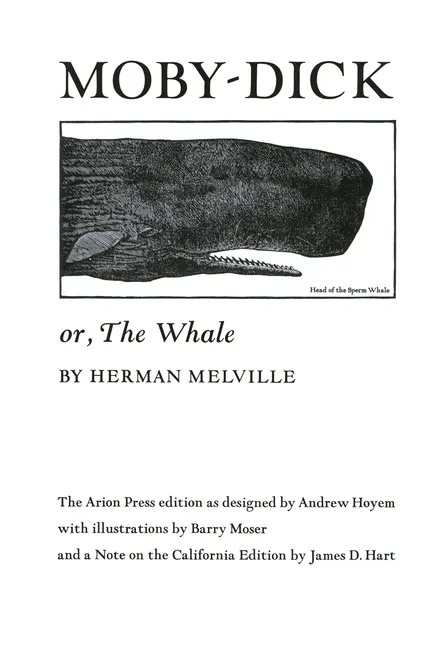
Illustrations by Rockwell Kent
Nominated as one of America's best-loved novels by PBS's The Great American Read
First published in 1851, Herman Melville's masterpiece is, in Elizabeth Hardwick's words, "the greatest novel in American literature." The saga of Captain Ahab and his monomaniacal pursuit of the white whale remains a peerless adventure story but one full of mythic grandeur, poetic majesty, and symbolic power. Filtered through the consciousness of the novel's narrator, Ishmael, Moby-Dick draws us into a universe full of fascinating characters and stories, from the noble cannibal Queequeg to the natural history of whales, while reaching existential depths that excite debate and contemplation to this day.
Herman Melville
Herman Melville was born in 1819 in New York City. After his father's death he left school for a series of clerical jobs before going to sea as a young man of nineteen. At twenty-one he shipped aboard the whaler Acushnet and began a series of adventures in the South Seas that would last for three years and form the basis for his first two novels, Typee and Omoo. Although these two novels sold well and gained for Melville a measure of fame, nineteenth-century readers were puzzled by the experiments with form that he began with his third novel, Mardi, and continued brilliantly in his masterpiece, Moby-Dick. During his later years spent working as a customs inspector on the New York docks, Melville published only poems, compiled in a collection entitled Battle-Pieces, and died in 1891 with Billy Budd, Sailor, now considered a classic, still unpublished.
More by Herman Melville







Why Readwise Books?
Readwise Books is an ebook & audiobook platform that automatically logs how much you and your friends read, making it fun and easy to read more. Learn more →