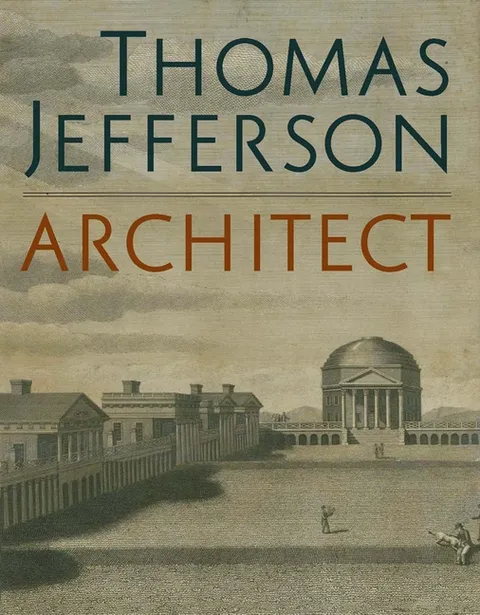
Thomas Jefferson, Architect
Palladian Models, Democratic Principles, and the Conflict of Ideals
Report an issue
Tell us what's wrong and we'll take a look.
Thanks – we got it. We'll review and follow up if needed.
Renowned as a politician and statesman, Thomas Jefferson (1743-1826) was also one of the premier architects of the early United States. Adept at reworking Renaissance--particularly Palladian--and Enlightenment ideals to the needs of the new republic, Jefferson completed visionary building projects such as his two homes, Monticello and Poplar Forest; the Capitol building in Richmond; and the University of Virginia campus. Featuring a wealth of archival images, including models, paintings, drawings, and prints, this volume presents compelling essays that engage broad themes of history, ethics, philosophy, classicism, neoclassicism, and social sciences while investigating various aspects of Jefferson's works, design principles, and complex character.
In addition to a thorough introduction to Jefferson's career as an architect, the book provides insight into his sources of inspiration and a nuanced take on the contradictions between his ideas about liberty and his embrace of slavery, most poignantly reflected in his plan for the academical village at the University of Virginia, which was carefully designed to keep enslaved workers both invisible and accessible. Thomas Jefferson, Architect offers fresh perspectives on Jefferson's architectural legacy, which has shaped the political and social landscape of the nation and influenced countless American architects since his time.
Published in association with the Chrysler Museum of Art
Exhibition Schedule:
Chrysler Museum of Art, Norfolk
(October 19, 2019-January 19, 2020)


Why Readwise Books?
Readwise Books is an ebook & audiobook platform that automatically logs how much you and your friends read, making it fun and easy to read more. Learn more →