Report an issue
Tell us what's wrong and we'll take a look.
Thanks – we got it. We'll review and follow up if needed.
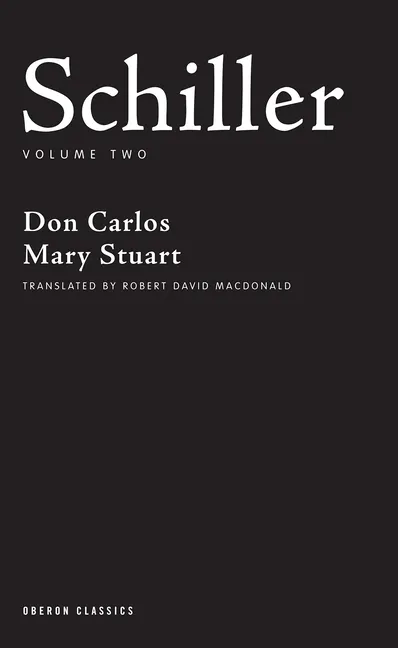
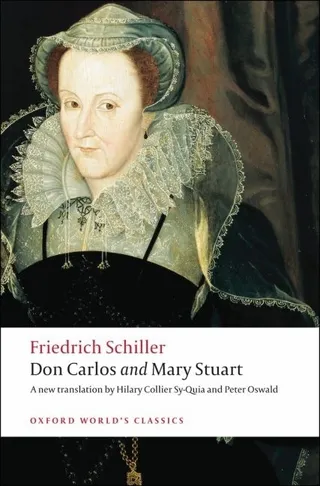
Includes the plays Don Carlos and Mary Stuart
Major historical upheavals of the Sixteenth Century illuminate Schiller's increasingly troubled reaction to the present in these two plays. The huge epic Don Carlos (1787), a 'play expressing a view of life', marries the ideological battle between Philip II of Spain and his son Don Carlos to a gripping narrative. In Mary Stuart (1800), Schiller, sickened by the excesses of a revolution he had once supported, brings together two monarchs - the English Elizabeth Tudor and the Scottish Mary Stuart, cousins who in reality never met - when Mary, falsely accused of conspiracy, finds herself at Elizabeth's mercy.
Friedrich Schiller
Johann Christoph Friedrich von Schiller (1759-1805) ranks as one of the greatest figures in European drama and literature. That Verdi based four of his operas on Schiller's plays is not surprising (I masnadieri, Giovanna d'Arco, Luisa Miller, Don Carlos). Both men were deeply preoccupied with the battle for political freedon, projecting the moral victory of the doomed individual over the power of the immutable State as potent historical drama. Schiller's nobility of theatrical concept perfectly suited the energy and majesty of Verdi's scores. Yet in the English-speaking world Schiller's works are comparatively little known to theatregoers. The dedication of the renowned Glasgow-based Citizens' Company and the inspired decision to present the plays alongside Verdi's operas at the Edinburgh International Festival have gone a long way to remedy this neglect. The fifth play included in this edition was the source fro the opera by Donizetti (Maria Stuarda). Also translated for the Citizens' Company by Robert David MacDonald, Schiller's 'Mary Stuart' is acknowldged masterpiece.
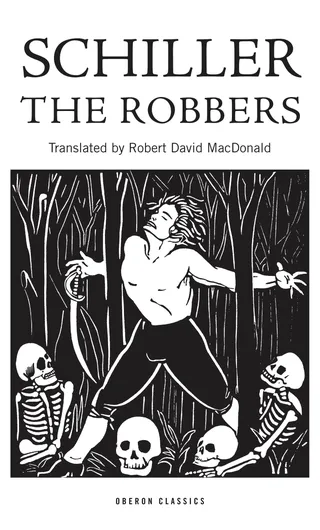
More by Friedrich Schiller
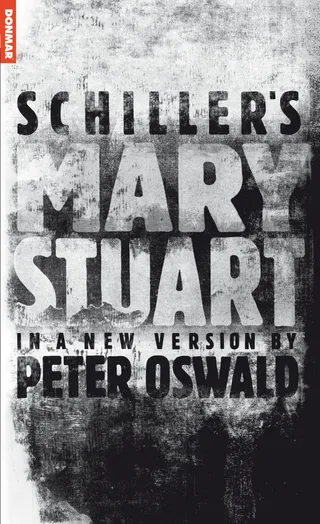
Robert David MacDonald
Translated by
Robert David MacDonald (1929–2004) was born in Elgin, Scotland. After originally training as a musician, he worked as a Director, Playwright and Translator. As an Assistant Director, he worked at both the Glyndebourne Opera Festival and for the Royal Opera House. In 1971, he became Co-Artistic Director of the Glasgow Citizens Theatre, where he directed fifty plays and wrote fifteen for the venue before his retirement in 2003. The plays that he wrote for the Glasgow Citz include The De Sade Show (1975), Chinchilla (1977), Summit Conference (1978), also seen in the West End with Glenda Jackson and Gary Oldman, A Waste of Time (1980), Don Juan (1980), Webster (1983), Britannicus (2002) and Cheri (2003). As a translator, MacDonald translated over seventy different plays and opera from over ten different languages including The Threepenny Opera, Tamerlano, Die Entführung aus dem Serail, The Marriage of Figaro, Orpheus and The Human Voice, Conversation at Night, Shadow of Angels, The Balcony, The Government Inspector, Tasso, Faust I and II, Ibsen’s Brand and Hedda Gabler, Lermontov's Maskerade, Lorca's The House of Bernarda Alba, Molière's School for Wives and Don Juan, Pirandello's Enrico Four, Racine's Phèdre, Schiller's Mary Stuart, The Maid of Orleans and Don Carlos, Chekhov's The Seagull, Verne's Around the World In Eighty Days, Wedekind's Lulu and Goethe’s Clavigo. His adaptation of War and Peace ran for two seasons on Broadway and received an Emmy award when shown on U.S television. The Finborough Theatre has previously presented Robert David MacDonald’s versions of Rolf Hochhuth’s Soldiers (2004) and The Representative (2006)


Why Readwise Books?
Readwise Books is an ebook & audiobook platform that automatically logs how much you and your friends read, making it fun and easy to read more. Learn more →