Report an issue
Tell us what's wrong and we'll take a look.
Thanks – we got it. We'll review and follow up if needed.
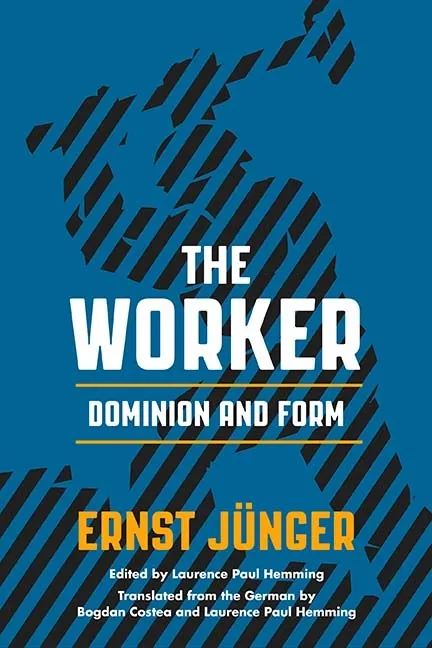
Martin Heidegger considered Jünger "the only genuine follower of Nietzsche," singularly providing "an interpretation which took shape in the domain of that metaphysics which already determines our epoch, even against our knowledge; this metaphysics is Nietzsche's doctrine of the 'will to power.'" In The Worker, Jünger examines some of the defining questions of that epoch: the nature of individuality, society, and the state; morality, justice, and law; and the relationships between freedom and power and between technology and nature.
This work, appearing in its entirety in English translation for the first time, is an important contribution to debates on work, technology, and politics by one of the most controversial German intellectuals of the twentieth century. Not merely of historical interest, The Worker carries a vital message for contemporary debates about world economy, political stability, and equality in our own age, one marked by unsettling parallels to the 1930s.


Bogdan Costea
Translated by
Bogdan Costea is Senior Lecturer in the Department of Organization, Work and Technology at Lancaster University, UK.


Why Readwise Books?
Readwise Books is an ebook & audiobook platform that automatically logs how much you and your friends read, making it fun and easy to read more. Learn more →