U.S. petroleum depletion imposed deadline on Hormuz war
Length: • 2 mins
Annotated by Maxwell Aitken
U.S. petroleum depletion imposed deadline on Hormuz war
18 June 2026
This is a short extract from a newsletter sent to paying subscribers earlier today. You can read my newsletters in full by becoming a subscriber.
Since the start of the war with Iran, depletion of the Strategic Petroleum Reserve (SPR) has bought time for the U.S. government to develop both diplomatic and military options to re-open the Strait of Hormuz.
The United States has explored diplomatic negotiations via Pakistan and other mediators, as well as attempts to unblock the Strait by force, organising via virtual convoys using aircraft and drones to protect tankers in the waterway.
Some tankers carrying crude, liquefied natural gas (LNG) and liquefied petroleum gas (LPG) have successfully transited as a result of diplomatic agreements or under the armed protection of the United States.[1]
Since announcing a ceasefire in early April, the United States has pursued a mixed strategy of bombing-while-negotiating, holding talks while trying to increase the number of transits under cover of darkness.
The intention appears to have been to pressure Iran into accepting a deal while at the same time degrading Iran’s ability to threaten shipping in case the talks fail.
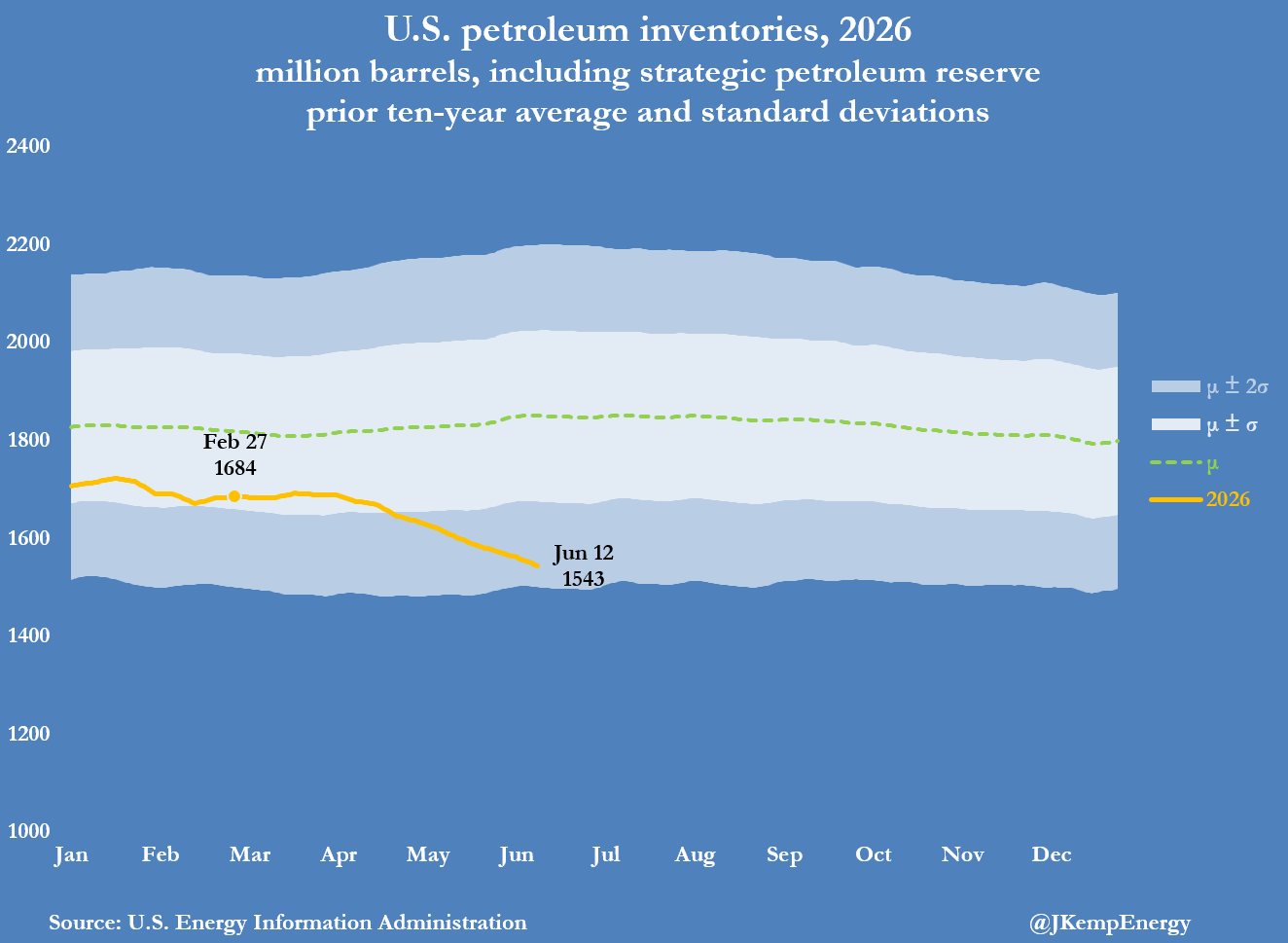
But with petroleum inventories at home running down rapidly, top U.S. policymakers have faced an increasingly urgent deadline to decide whether to reach an agreement with Iran or attempt to re-open the Strait fully by force.
Ultimately, the White House seems to have decided the embarrassment of a diplomatic deal achieving less than its stated war aims was a lesser evil than the potential risks from trying to force the Strait open against hostile fire ...
Become a subscriber to all my other exclusive content by signing up via my website
JKempEnergy
Website: jkempenergy.com
Twitter: @JKempEnergy
Bluesky: @JKempEnergy
Phone: +44 7789 483 325
If you no longer wish to receive emails from me, you can remove your email address from the circulation list using this link: