Go Broad
Length: • 7 mins
Annotated by Marko Bremer
But not just because it makes you more effective at leveraging AI
Thank you for being here. Please consider supporting my work by sharing my writing with a friend or taking out a paid subscription.

Welcome back! I hope you all had a great time over the holidays and were able—like me—to get some space and rest from the normal routines. It feels like an eternity since I last wrote here almost a month ago. It was my longest blogging break since I started writing here a few years ago. Needless to say, I’ve been itching to sit down at the keyboard and think through a few ideas that have been rattling around in my brain since my last missive. I’m glad to be back.
The modus operandi of this blog has always been to serve as a space for me to think out loud without many topical boundaries. Believe it or not, I started writing here with the idea that each post would be four short sections:
- something I’m reading
- something I’m up to on campus
- something I’m doing for fun, and
- a photo of something that’s piqued my interest over the last week.
I figured I’d open each post with a short note at the top of each post to work through something I was trying to think about. Over time that “short” note has taken on a life of it’s own.
I say all of that as a reminder about what to expect here. While many (most?) of you are here because of something I’ve written about AI, you can expect that I’ll occasionally write about something more personal. As we pass the one-year anniversary of the Eaton Fire today, I’ll likely share some of my reflections of the past year in an upcoming post. It’s also not out of the ordinary for me to share a reflection shaped by my identity as a follower of Jesus.
What you can always expect, whatever the topic, is an attempt for me to offer something of value that I hope will allow you and I to connect in some small way. A newsletter, after all, is a letter. I count it a privilege that you all allow me to write into your inboxes each week.
Andreessen’s Advice for the Next Generation
Ok, with that throat clearing out of the way, let me dig into something that’s been on my mind lately. Shocker, it’s about AI.
A few weeks ago, a video from the summer resurfaced in my Twitter feed. In the clip, Marc Andreessen—the co-founder of the venture capital firm Andreessen Horowitz and author of the Techno-Optimist Manifesto, among other things—shares some advice for the next generation of entrepreneurs. The relevant clip starts here, around the 13:35 timestamp, with the first part of Marc’s answer wrapping up just after the 16-minute mark. Take a look.
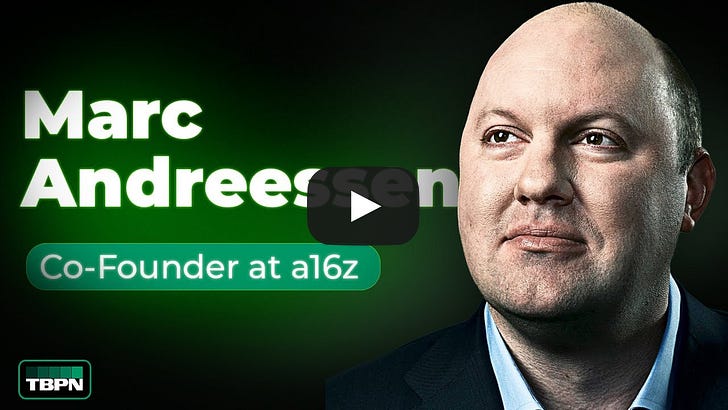
At a high level, Andreessen is on to something. It was interesting to me that the first place he goes is the Steve Martin line that is also the title of my favorite Cal Newport book. “Be so good,” Martin, Newport, and Andreessen say, “that they can’t ignore you.”
Ok, fine. But how exactly is one to do that?
Deep and Wide
Andreessen has suggestions: To be so good you can’t be ignored, you typically have one of two choices: go deep or go broad. Going deep has traditionally been a pretty surefire way to build a competitive advantage. Developing deep expertise in an area is hard and time-consuming, which almost always means that it is, to borrow Newport’s phrasing, “rare and valuable.”
But generative AI is meaningfully reshaping the competitive value of depth. It’s not that deep expertise isn’t valuable anymore, but the way that generative AI tools can find, filter, and synthesize information at scale and with speed means that many of the aspects that could only be built in the process of developing deep expertise are now accessible without it. The expertise itself may still be valuable, but much of the knowledge that came along with it is no longer as rare or valuable as it once was.
While generative AI will continue to undercut the value of depth, it has correspondingly increased the value of breadth. And so, Marc’s suggestion to the next generation? Go broad.
I agree with Marc that generality and breadth will be increasingly valuable in a world where artificially intelligent computations systems ala Claude Code will continue to grow more powerful. It feels almost self-evident that the kind of people who are able to use AI to extend their capacities in various ways will be well-prepared to be efficient and effective people in the future. This will be most pronounced in domains like entrepreneurship, where the margin for success is razor thin, and every little bit to tip the scales in your favor helps.
But the value of breadth is about much more than making you a more effective entrepreneur. At least, it’s about much more than making you into Andreessen’s version of an effective entrepreneur.
In a world where AI allows you to quickly go deep and build quickly in any particular domain, the big questions are all the more important. The questions about what to build and why. The questions are about who is being served by a particular technology and who is being exploited by it. The questions about who a particular product is helping flourish.
This is an age-old problem for builders. We fall in love with building and forget to spend time thinking deeply about what we’re building and why. The cardinal sin of the entrepreneur/engineer/builder is that we design the right solution to the wrong question. We spend the lion’s share of our time working on strategy and execution at the cost of thinking about purpose and meaning.
Insight into purpose and meaning is the true value of breadth. Breadth is not just about a wide range of technical training or the ability to have a serviceable knowledge of various areas of a business. Andreessen advises entrepreneurs to go broad. To learn a little bit of product, marketing, finance, and legal in order to run a business more effectively. Might I suggest that the time might be even better spent engaging with philosophy, literature, history, religion, and art.
It is probably no surprise to many of you that this is my perspective. After all, I teach at a STEM liberal arts college where we are all about exactly this sort of education. A Harvey Mudd education is at its core about breadth, helping its students to build technical skills across a wide domain while also immersing them in the liberal arts so that they might learn how to lead and how they might understand the impact of their work on society.

Andreessen is right that the future is likely to reward the entrepreneurs that can build just enough expertise across a wide set of domains so that they can effectively leverage AI to amplify it. In the interview, he muses about what it might look like to have a company of 1000 “people” where 999 are bots. From a market leverage perspective, that would be hard to beat. Imagine the leverage.
But the company, however large, is only as worthwhile as the why behind it. It’s not just about what a company is doing, it’s about how and why they are doing it. It’s not just about the product or service on offer, but how that product is built and the intention behind it.
Got a thought? Leave a comment below.
Reading Recommendations
This piece from Alan Jacobs (h/t Audrey Watters for the link in one of her recent newsletters). We don’t need more knowledge, we need reordered loves.
Those of us who care about the future of our children, our neighbors, and ourselves don’t need to repeat what everyone already knows. We need to devote our full attention to one question and one question only: How do we love rightly and teach others to love rightly? If that’s not our constant meditation, we’re wasting our time. If we cannot redirect our desires towards better things than Silicon Valley, AKA Vanity Fair, sells, then nothing, literally nothing, will get better.
I loved this list of 101 additional advices from Kevin Kelly. It would be criminal to share just two or three here. Go read the full list, it will only take a few minutes. I guarantee you’ll get something useful from the exercise.
The Book Nook
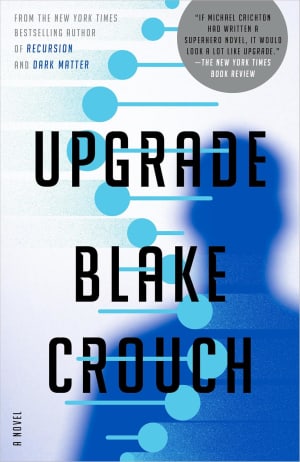
I have been slowly trying to rehabilitate my reading habit and figured some fiction and sci fi might be a good way in. Over the break I read Upgrade by Blake Crouch, a story of how more powerful versions of the genetic engineering tools we have today might shape our world.
What I appreciate most about sci fi is the way it can expand our imagination. What I appreciate about Blake Crouch’s writing in particular is the way that he uses this expanded imagination as an opportunity for introspection and to cultivate questions.
The Professor Is In
Not much happening on campus over the past few weeks, but I’m excited to get going on a few of the AI-related projects that I’m involved with as the Spring semester approaches. More to come soon!
Leisure Line
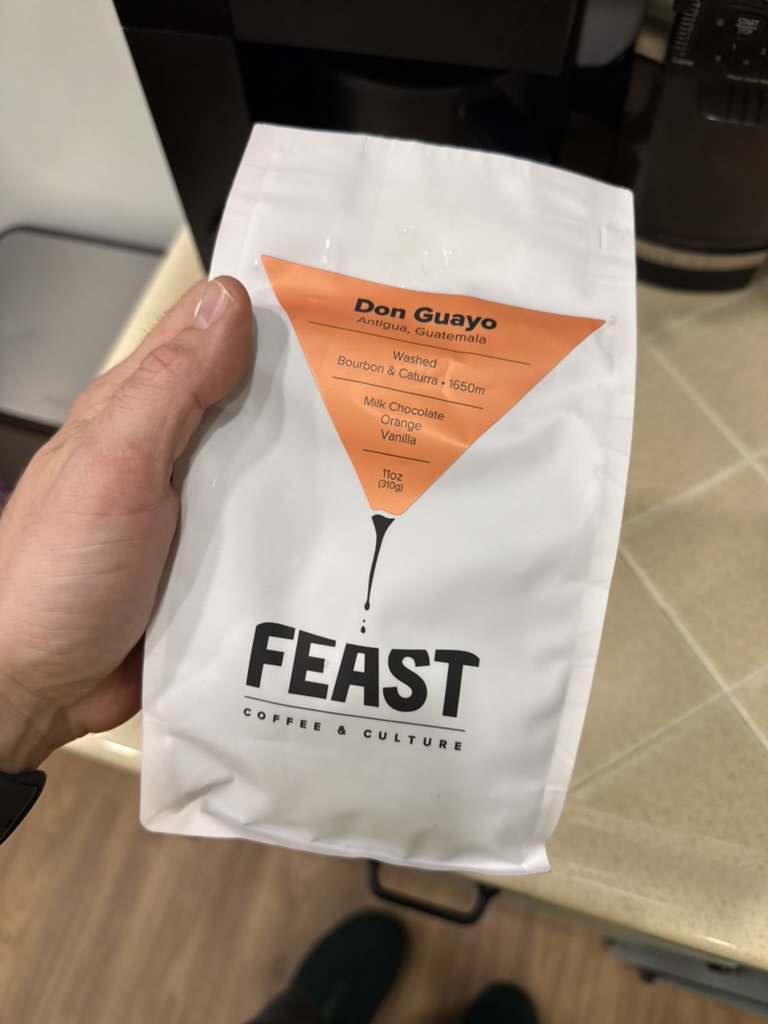
My folks got me a subscription to Trade Coffee for Christmas and my first delivery just arrived this week. Roasted just last week. First cup was great!
Still Life

Went out for a little family SoCal ice skating outing between Christmas and New Year’s. Kids loved it!
At the end of the day, this newsletter is a letter from me to you. Thank you for being here.
Some of the links in this post may be affiliate links. This means that at no extra cost to you, making a purchase through one of these links helps support this work.