5 Laws Every Founder Must Know
Length: • 15 mins
Annotated by Emre Doganer
The 5 strategy laws every
founder must
know
(but few do)



I N T R O D U C T I O N
You don’t have a strategy
At least I’m pretty sure you don’t. Very few brands do.
Some think they do, but what they’re calling a “strategy” is nothing of the sort. Some do have something we might call a strategy, but it doesn’t work very well.
But to tell the truth most don’t even think about the topic at all. In the space where there should be a strategy, there’s simply nothing. A vacuum.
Let’s put it this way, if you had a strong strategy then believe me, you’d know it. And so would everyone else. You’d be the brand everyone in your industry measures themselves against. The one customers talk about. The one that gets referenced in case studies. The one making the uniquely fat profits, and enjoying effortless growth.
If this is you, then thanks for reading, I hope you enjoy having your own wisdom reflected back at you. Get in touch because I’m always looking for more examples.
But if this isn’t you, let me take a minute or two to spell out what that means.
Just why is it so important to have a strategy?
Well, here’s what happens when you don’t.
- You live in a constant state of confusion A strategy is something that tells you what to do. It’s a decision making tool that makes it clear what’s right and what’s wrong. What will work, and what won’t. Therefore if you don’t have one, the first consequence is obvious: you’ll get confused. You’ll be uncertain about what path to follow. You’ll agonise over every decision. You’ll hedge your bets. You’ll avoid too much commitment or too much focus in one direction. You’ll be timid. You’ll be cautious. You’ll do all the things which, over time, steer your brand towards mediocrity. Brands and founders with a clear strategy know exactly what they’re for, where they’re going, and what they need to do. If you don’t feel that same sense of conviction, you’ve got a strategy problem.
- You struggle tostandout A strategy describes what you do differently from everyone else. The unique choices you make that drive performance. “They all do X, but we do Y”. If you don’t have this then guess what? The opposite happens. Rather than standing out from your competitors, you start to blend in. You copy their decisions, rather than defying them. This may happen consciously or sub-consciously - it doesn’t really matter - but one way or another it will happen. It’s the natural consequence of not having a clear understanding of what you do, and even more importantly what you don’t do.
- Your profit shrinks When all’s said and done, the ultimate job of a strategy is very simple: to maximise your profits. It does this by putting you in a position where you can charge more and spend less. The more strategic your brand, the more profitable. It’s that simple. When you don’t have a strategy however, you have to make up for that lack in various profit-sapping ways. You have to compete on costs. You have to spend more on marketing. You have to work harder because you don’t have a way of working different. These efforts might keep the lights on and the doors open, but it won’t be fun. Only strategy can guide you into the creamy world of abundant easy-flowing profits.
- And at the end of the day,
nobody gives a damn
It’s one thing to run a functional, sensible, reasonably profitable business. That’s great. But if you’re reading this, you aspire to more than that.
You want to create something people care about.
Something that gets the bloody pumping. That changes behaviours. Reshapes markets. Alters perceptions. And commands an emotional response that borders on the irrational.
As I’ll explain shortly, great brands like this are always built on strategy. Strategy is the secret ingredient that enables all the behaviours that result in that kind of bravery, that kind of clarity, that kind of passion.
Make no mistake, the things I’ve described above aren’t “bad”. They’re just normal.
Most businesses are a bit confused. Most businesses struggle to stand out.
Most businesses command mediocre profits.
And most businesses, let’s face it, nobody really gives a shit about.
If you’re happy enough to be like this too, that’s fine. You’ll probably survive. You might even become pretty successful, given enough time, sweat, and aggro.
But my guess is that if you’re reading this, you want more. The thing that will give it to you is strategy.
And the 5 laws that follow will outline just how that strategy should work.
L AW 1
Strategy is about
giving
Let’s take things back to basics.
Probably further back than you’ve ever thought before.
What exactly is a business? It’s simple. A business is a system that’s been designed to deliver value to people, and to collect value (usually money) in return. Value out, value in.
Based on this logic, it should be obvious how you increase the value you collect:
Increase the value you give.
This is what strategy is all about. Your strategy is the value you give to your customers. The more value you give, the more value you’ll get. Easy.
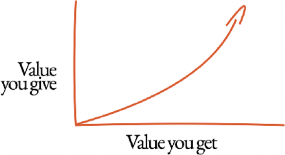
Fig 1. Pretty much all you need to know about business
When you understand this, you can see that the equation for a strategic business is very simple:
- First you decide what value you are in the business of providing
- Then, with that clear in your mind, you pour all your energy into delivering that value
As you do this, two things will happen. First, you will gradually give more and more value to customers, thus increasing the value you can collect (profit). And second, you will gradually become more and more different from your competitors, since you will be basing all your decisions and activities on this particular value offering that only you are delivering.
(On this point, in case it isn’t blatantly obvious, any value offering should be clearly unique. If it isn’t unique, then it isn’t really giving people value, as they can already get it elsewhere so nobody needs you. You’re just “diluting the pool”, and there’s no value in that).
There are four basic ways you can give value to people. These are:
- Serve a particular group of people These are brands who provide a fairly standard sort of service, but do it for a particular set of people. This might mean a particular demographic (e.g. men / women), people in a particular place (e.g. urban / rural), or people in a particular situation (e.g. single / families). Walmart for instance began by setting up its stores in medium-sized towns that other big chains ignored.
- Serve a particular need Conversely, some brands aren’t really concerned about serving a particular kind of person, and instead serve a particular need which might be felt by a wide variety of different people. For example in the car rental world Hertz rent cars to people who are travelling, Enterprise rent cars to people in their home cities, and Zipcar rent cars to people who only need them for an hour or two. Different brands, different needs, different value offerings.
- Strip things back for over-served customers This is the typical “budget” strategy, where a brand realises that the standard offering in their market is more than some people need, and so remove elements from it so they can then sell at a lower cost. Cheap supermarkets, low-cost airlines, pay-as-you go gyms - all these sorts of brand are playing this game.
- Pump the offering up for under-served customers
Conversely the typical “luxury” strategy is to recognise that the standard offering in a given market isn’t enough for some people, and so offer more for a higher price. In some ways this is similar to serving unmet needs, except generally it means giving the consumer “more” rather than giving the consumer something “different”.
As you can see each of these approaches is very different, and will suit different brands, but what they all have in common is this:
They give something to punters they can’t get elsewhere.
This contrasts to the way many businesses think about “strategy”, which is to spend their time plotting how they can take more from the market, without necessarily giving anything in return.
That doesn’t work.
Great brands give, and their strategies simply describe how they do it.
L AW 2
Strategy isn’t about
being smart
If strategy’s so great, why don’t people do more of it? Because most strategies suck.
Most strategies are complicated, vague, waffly, unactionable, and do nothing to propel the performance of the business - so why bother?
Of course, all this is the precise opposite of what a strategy is meant to be, so we should ask why this happens. Why is most strategy so bad that people ignore it altogether?
Because people think strategy is about being smart.
There is this misconception that for a strategy to be good, it must be very very clever. And to many people “clever” means “complicated” or “sophisticated”. They think it means it must incorporate a huge volume of data, and be dense, technical, and unequivocally “right”.
This way of thinking naturally produces garbage strategies which, whilst perhaps being very “intelligent”, aren’t of much use to anyone.
No, one of the deepest secret truths of strategy is that it isn’t about being smart, or even necessarily being right. No, instead;
Strategy is about giving you confidence.
We have to remember that the strategy itself is nothing. It’s just words on a piece of paper. What actually counts is the action that the strategy provokes - and therefore the first way we must judge a strategy is like that: does it make you act?
If not, who cares how “clever” it is? Its practical effect is going to be a big fat zero.
We should also remember that confidence isn’t only a matter of clarity, and knowing what you need to do. It’s also a matter of conviction. Of lighting a fire in you that won’t only get you to act, but will get you to act with intensity and passion.
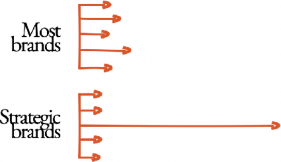
You see the truly great brands - the ones everyone always talks about - aren’t that way simply because they have “good strategies” (though they do). No, they are that way because they go further, harder, and braver in their execution than anyone else (fig 2.). They don’t just deliver their value offerings. They they over-deliver them. They let them run wild.
Fig 2. The difference between hesitancy and conviction
One of the best recent examples of this can be seen with the car brand Ford - who have miraculously managed to transform from perhaps the blandest automotive brand in the world, to one of the most exciting.
The basic way they did this was to cut all their ordinary cars from their line, and only focus on building 4x4s and trucks - “macho” adventurous vehicles. This instantly gave them a clear and coherent value offering on paper, but what really moved the needle was the amount of attention and creativity they were able to pour into their reduced product line - in particularly the Bronco (fig 3.) and the F150.

Fig 3. The Ford Bronco - what strategic confidence looks like
The Ford Bronco isn’t just another 4x4; it’s totally bonkers. The doors come off, it has a drain in the footwell in case you fill it with water, and is packed with stuff that shows the brand was really going for it when it came to designing this vehicle.
This is a manifestation of confidence. Of feeling empowered to push things further than anyone has before.
So yes, of course, it’s nice to be “right”. Certainly we don’t want a strategy to be dumb. But it’s nicer to be confident.
That’s the litmus test you should be applying to every idea you have.
L AW 3
Strategy isn’t about winning
All strategy is developed in relation to competitors - meaning other options the consumer might have to solve their issue instead of you.
However just because you have “competitors”, that doesn’t mean you should be trying to
compete with them.
On the contrary, great strategy does just the opposite: it avoids competing at all cost.
You see, when brands try to compete with one another, what this generally means is that they try to “beat” each other - like two boxers in the ring. They try to create a scenario where they will be the “winner”, and the other will be the “loser”. Where one gets the prize, and the other is left with nothing.
The problem with this approach is that it means both brands are going after the same customers, and the same market opportunities, and therefore are both offering the same value.
When this occurs the only way to “win” is to lower your costs, spend more, try harder, and generally take actions which gradually commodify your product. Brands locked in a competitive battle like this gradually become more and more similar (as they counter each other’s moves), and more and more unprofitable.
The desired “win” never comes, and even if it does it’s pretty thin gruel by that point. We can summarise this competitive approach, which frankly most brands employ, as: Trying to be “better".
This is not strategic. Strategy is about creating difference with your competitors, and “better” is not different, it’s just another way of saying “the same”. If you say “we are better than our competitors” what you’re actually saying, strategically speaking, is “we are the same as our competitors - but we try harder”. And even then, your competitors would probably disagree - so it’s all nonsense really.
To be different, you must forget about being better, and instead focus on providing value to the market which your competitor simply doesn’t do. When you do this, you are no longer “competing” with them, because people who want what you’re offering won’t even consider them. And what is more, people who want what they are offering won’t even consider you!
To give an example you might say at Airbnb and hotels are “competitors”, and this is true, in the sense that they both occupy the same market. However for the most part people who want to stay in a hotel don’t consider Airbnb, and people who want to stay in an Airbnb don’t consider hotels.
That is what a healthy market looks like.
It mirrors a natural ecosystem, where each organism has a unique role to play that’s symbiotic with all the other organisms around it. Rather than competing, they actually collaborate, as the role of each one complements the roles of the others (fig 4.).
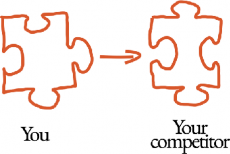
Fig 4. Competitors should’t fight, they should “fit” together
After all, the “rawness” of an Airbnb actually accentuates the convenience and comfort of a hotel. And equally the “safeness” of a hotel accentuates the authenticity and adventure of an Airbnb.
So you can see, they’re not really against each other - they’re in cahoots.
This is why sports analogies in business are frankly kind of bullshit, because in sport the two competitors are forced to play against each other within the same rules. Rules that have been artificially set up to produce a winner and a loser.
Markets are not like that. The world isn’t like that. They are open and free, and you are able to play your own game, by your own rules.
Your strategy will define what they are.
L AW 4
Strategy is about
what you do,
not what you say
When people think about “value offerings” or “value propositions”, they generally think about them in the context of marketing.
And for most people marketing means “comms”.
Therefore people quickly slip into the trap of thinking a business’s value offering (i.e. its strategy) is something that only pertains to its presentation - marketing messages, tagline, ads, etc.
This. Is. Fatal.
A strategy is not a message, it’s an instruction. It’s a statement of what the business actually does, and therefore has to be reflected in the actions the business takes.
To have a differentiated value offering overlaid onto an undifferentiated business is meaningless - and yet it’s what companies try to do all the time in their branding exercises.
Yes, it’s true that if you communicate your generic offering more creatively and more clearly than your competitors you might be able to steal a march on them. Fine. But such advantages will yield little in the way of outsized profits, and are fundamentally not defensible or sustainable.
True strategic advantage comes from operating in a fundamentally different way from the other businesses around you, as dictated by your strategy.
These differences could manifest anywhere: in your product, your production methods, your distribution, your customer care; anywhere a change can be done that will feed into the value.
Take IKEA, whose strategy is essentially to make designer furniture accessible to everyone. This offer isn’t just hot air, it’s built on an incredible number of operational differences. Most obvious is their flat pack innovation, so customers have to assemble their furniture themselves. But on top of that there’s:
- Giant out-of-town stores which can hold large amounts of stock which customers are then able to drive away in their cars
- Limited in-store sales assistance, with customers serving themselves through a ticket system
- Sticking to a single Scandi design aesthetic which is low-cost on materials
- Dramatically more efficient distribution network than average, enabled by the flat- pack
...and that only scratches the surface.
So I’ll repeat: strategy is not solely a marketing game (though it is that too). It’s a blueprint for how you operate, top to bottom.
To make this easy and intuitive, I like to use something I call the strategic hierarchy. It’s a super basic model of your entire business from the strategic perspective, and it ensures you get everything lined up just right. It looks like this:
Fig 5.
The strategic hierarchy
Strategy

The unique value offering which only you deliver.
Product
The unique way you deliver that value through your operations.
Branding
The way you communicate that value creatively and clearly.
That’s it, ABC, 123. Any strategically sound business should be able to fill this out effortlessly. And it ensures you don’t forget that the strategy must manifest in both saying and doing.
There’s one particular reason I think people struggle with this, which reduces many “strategies” to little more than marketing waffle: writing strategies which simply aren’t practical.
A strategy can only work if it gives a clear instruction to the business as to what it needs to do. This means that a strategy should instantly demand a number of changes to the business when you’ve figured it out.
If it doesn’t, then all you’ve done is a branding exercise; “dressing” the business in a prettier outfit.
If the business is already set up in a strategically differentiated way, and you’re just putting the cherry on the top with some clear comms, that’s fine. But that’s normally not the case.
Don’t just talk, do something.
L AW 5
And believe it or not, strategy should be fun
A lot of the analogies people associate with strategy are really unhelpful.
It’s all chess pieces, models, data analytics, corporate boardrooms, grey suits, and the rest of it.
The impression you’re given is that it’s a cold-blooded scientific exercise, where if you find the “correct” answer it will yield results in the formulaic manner of a chemistry experiment.
This is untrue even as a matter of fact (the real world is far too messy for you to ever be totally “correct” or for things to go entirely according to plan), but more than that, it’s untrue in spirit as well.
Strategy is not a mechanical equation, it’s an act of mischief.
It involves going out there and doing something creative and bold, having some fun with it, and seeing what happens.
We can all understand the urge to judge a strategy by whether we think it will work or not
and that’s right of course - but we should also judge it on a more human level:
Is it interesting?
Is it exciting?
Is it entertaining?
Is it insightful?
is it provocative?
Fig G. Liquid Death, not taking this stuff too seriously
It sounds trite, but in business it’s constantly overlooked: people like interesting things. And this includes interesting brands. And how do you make an interesting brand? With an interesting strategy. A strategy that has a sense of mischief and joy about it.
Tesla built demand in the electric car market not by pursing an overly rational strategy, but by seeking to make that formerly dorky category sexy and luxurious. This is why their first vehicle was a convertible roadster, not a Prius-like run-around.
At the time of writing, people are going crazy over the canned water brand Liquid Death (fig G.), whose entire idea basically boils down to branding water in an edgy “heavy metal” kind of way, more suited to what people would associate with beer and cigarettes than anything healthy. Essentially it’s a piss-take. But a piss-take that’s now valued at
$700million.

Despite such examples, many of us are still held back by the nagging suspicion that the boring answer must be the right one. That the deck with more slides and charts must be the truer analysis than the one that’s more imaginative. It’s almost like we take our reverence for scientific disciplines we don’t understand - like nuclear physics - and then apply it to our business thinking.
“If I don’t get it, and find it a bit boring, then it must be right!”
But business is not science, not even a little bit. There is no “right” solution. There are no “laboratory conditions”. It’s an open problem, like life in general, which rewards boldness rather than reductive reasoning.
In the case of strategy, sure, we sometimes allow a bit of creativity into advertising
strategy, because hey, advertising is irrational, right?
Well guess what - the whole thing’s irrational.
Consumers are irrational, in terms of what they will value and what they will not.
And you too are irrational, in terms of what strategies you’ll enjoy executing, and will really get behind - and what ones you’ll just pay lip service to because they seem “sensible”.
So by all means be right. By all means be rigorous.
By all means do your research.
By all means consider all the angles. By all means look deeply into the data. By all means test your assumptions.
All of the above is just and necessary.
But in the end, when all’s said and done, be prepared to take a leap. Trust your intuition. And go with the strategy that gets your heart racing.
Because if it does that for you, chances are it will for someone else too.
Now what?
Your job now is pretty obvious:
- Get a strategy
- Build a remarkable brand
- Make even more remarkable profits
And I can help you with that. Here are three ways:
- Follow me on Linkedin I share and discuss ideas just like the ones you’ve read here on Linkedin every single day. Just click here, follow me, and if you’re super keen hit the notifications bell to join me, and many others in deepening our strategic understanding.
- Read my book, No Bullshit Strategy If you want to get all the need-to-knows laid out for you clearly, methodically, and enjoyably over 138 short pages, then No Bullshit Strategy is the way to do it. It’ll put you straight into the top 1% of strategic thinkers for the price of a cocktail. Check it out at one of the following links, or wherever you like to buy books: Amazon UK Amazon USA
- When you’re ready, work with me
If you’re confused about what direction to take your business, and how to drive it to effortless growth, then I can help you.
If you’d like to know more about how I work, then click this link. Or if you’d prefer to cut to the chase, contact me here:
Tel: +44 (0) 203 3G8 3021
5th Floor Century House 100 Oxford Street London
W1D 1LN
Tel: +44 (0) 203 3G8 3021
20
Copyright © Basic Arts Ltd 2023.
All rights reserved.