How to Simplify Progress Updates to Stakeholders
Length: • 4 mins
Annotated by Miguel
Give stakeholders a way to find information without needing to tell them. Tell the story without needing to tell the story.
Hey folks, this is Ryan with another edition of The Software Engineering Times. I look to enable current technology leadership and help build you into the next generation of software leadership. You can subscribe for free and get weekly issues straight to your inbox. Paid subscribers get the full archive of issues, access to free resources, templates, special offers, 10% off coaching, and access to a private community.
The number one rule of stakeholder communication, is that they should never have to struggle to understand progress. Your communication needs to be proactive. It can easily be assumed this means verbally going out of your way to communicate and interact with a group of people regularly about your work. Which many find difficult and are not comfortable with.
There are many ways to proactively communicate you can try, which are non verbal and minimise interaction that might help you and also help keep stakeholders up to date at a glance.
Here are 3 ways you can tell the story without having to actually tell the story:
Traffic Light System
Different stakeholders have different needs. Senior management and executives are not typically close to the details of a project, nor do they want or need to be, but they are vested in the outcome. There will be other departments such as marketing and sales who also need to understand delivery for the timings of their campaigns to go with feature releases, and might be less interested in the moving parts.
The traffic light system provides an effective means of providing those stakeholders with a birds-eye view of project progress.
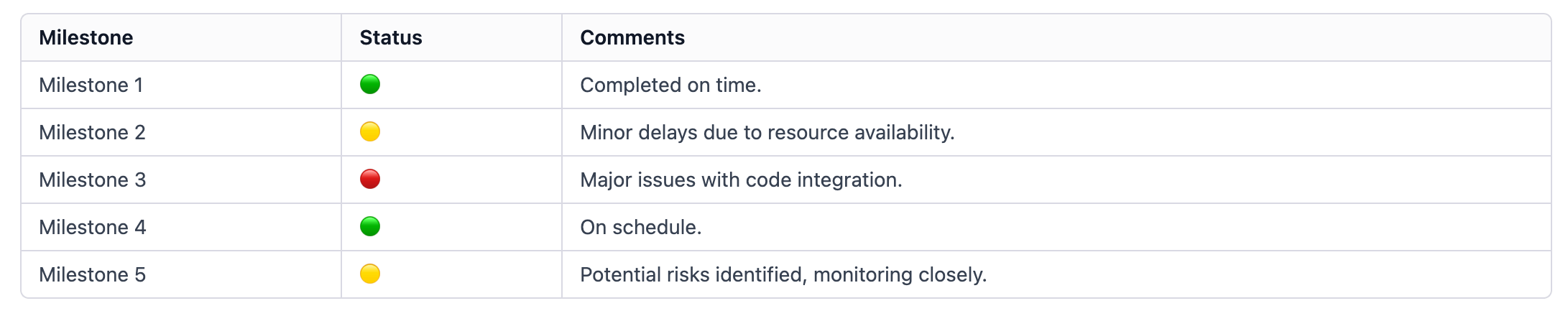
It uses the colours of a traffic light; red, amber and green to display progress against parts of the project as a whole.
Internal Newsletter
Stakeholders should never have to ask for an update on the project. They might decide to anyway, but they shouldn’t have to.
An internal newsletter sent on a regular cadence provides a predictable and assuring means of communication.
You can have surface level data-driven information upfront where people can click through further and further for more details. Keep your communications to the point and brief with a method of easily finding out more details. Utilising the traffic light system at the top of the newsletter is a good way of attracting the attention of glancers.
Best practices for an internal newsletter include;
- Keep it clear.
- Incorporate elements and visual which give key updates at a glance (traffic light system).
- Provide a way to give feedback (Slack channel, key contact).
- Don’t change it up to much too often. Keep it predictable.
Note: I will be adding a template for an internal newsletter to the resources section for my paid subscribers in the coming weeks.
High Level First Nested Wiki Pages
A second rule of stakeholder communication is that you need to have a single source of truth. A project wiki page plays that role.
Other means such as internal newsletters should all link back here. This can act both as a feeder source the team utilises and a key information hub for other teams.
‘High Level First Nested Wiki Pages’ is a phrase I have coined. It’s an attempt to demonstrate that you should strive to have the higher level project progress up front, and then a predictable and easily navigable way of drilling down into the finer technical details. This suits all stakeholders.
A wiki page is a really good way of including both a ton of detail and really high birds eye view. If you are clever about your nesting structure you can achieve the best of both worlds.
Closing Thoughts
Communication is hard. Especially when it can always feel like you have to constantly give updates in meetings, or if stakeholders are always asking for updates.
It’s important to reduce friction. Adopting the techniques above and other proactive methods will help give the impression that the project is well maintained and you have a good handle on its outcome.
People are unlikely to be asking (unless you are unlucky with a bad manager) because they just want to annoy you. It’s likely there is more invested. Marketing are probably wanting to keep updates on their targeted campaigns, sales might need to update their persona definitions and customer service folks might need to work out training timelines on any new features.
Part of delivering business value for the company is much more than just the technology.
This newsletter recently hit 4,000 subscribers, that’s so wild. Just quickly whilst I have you:
- Check me out on LinkedIn. Im at >50,000 followers now.
- Have a discount or deal that my paid subscribers would be interested in? Let me know and ill add it to the paid subscribers only area.
- Interested in some form of sponsorship for this newsletter? Hit me up.
Just like every good YouTube opening, please like this (click the heart button at the bottom) and subscribe. It really keeps me motivated and gives me heaps of help.