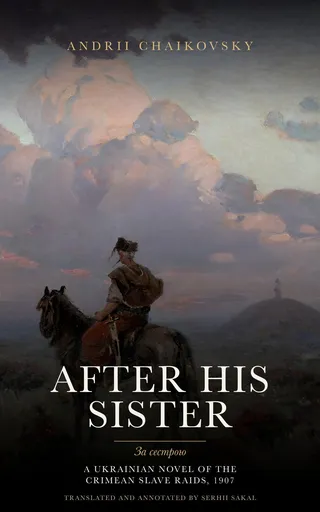
Andrii Chaikovsky
Andrii Chaikovsky was a working lawyer who wrote books in the evenings for decades, and the two halves of that life are not separate. The law kept him in small Galician towns among the people he wrote about. The writing came out of the same impulse as the reading rooms and the gymnastic societies he spent his energy organising: a conviction that a people without a state of its own keeps itself by knowing what it has been.He wrote in several directions - memoirs, stories of Galician village life, a sharp little sequence about drink - but the books that lasted are the historical novels, and most of those were written for the young. They are about Cossacks, and they are romantic in the plain sense: brave men, hard rides, a clear enemy. What keeps them from being merely that is the accuracy of the furniture. Chaikovsky knew what a frontier village looked like, what a raiding party came for, what a captive was worth and who paid it, and he put all of it in without stopping the story to explain.За сестрою, published in 1907, is the shortest and the best known of them. Ukrainian children have been reading it ever since, usually at about the age of the boy in it.When the Austrian empire ended he was sixty-one, and he served the West Ukrainian People's Republic as commissioner of the county he had been born in. That state lasted months. He went back to his desk, was elected to preside over his fellow writers in Lviv, and kept publishing until the year he died.