John W Campbell
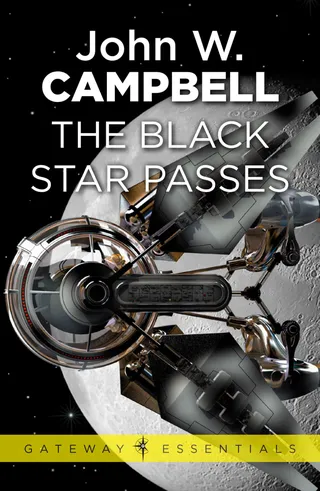
John W. Campbell Jr. (1910-1971) was an American science-fiction writer and the influential longtime editor of Astounding Science Fiction, later Analog. His fiction includes The Black Star Passes and Who Goes There?The conditions of the writer's period are important to an understanding of the work. Questions about the individual and society, including the roles of education, work, belief, and public institutions, repeatedly enter the literature and intellectual debates of the era. The historical setting should not be confused with a modern retelling: the language and assumptions of these works belong to their original moment.Campbell began publishing science fiction while young and studied at the Massachusetts Institute of Technology before graduating from Duke University. His early fiction often featured large-scale technological problems and adventurous scientific speculation. The Arcot, Morey, and Wade stories, including Islands of Space, are examples of this phase of his career; readers should distinguish magazine publication from later revised book appearances. Campbell's most lasting influence came through editing. As editor of Astounding, subsequently Astounding Science Fiction and later Analog, he encouraged writers to give scientific assumptions and technological consequences a central place in narrative. Authors associated with the magazine during his tenure included Isaac Asimov, Robert A. Heinlein, and A. E. van Vogt. Campbell could be a demanding and controversial editor, and his views did not always command agreement. His historical importance rests both on his own adventure fiction and on his influence over the mid-century direction of American magazine science fiction.In Islands of Space, the writer turns to early space-opera science fiction to develop a particular subject. A pioneering pulp-era adventure, first published in a 1931 magazine and later revised for book publication. Its achievement is best understood in connection with the author's established body of writing and the literary conventions through which the subject is presented.Readers approaching this work today can appreciate its historical frame alongside its literary ambitions. Its treatment of character, perspective, society, or argument offers insight into the concerns that shaped its original audience. Where names, dates, or the original author's identity are uncertain, those details should be resolved through the edition and bibliographical record rather than supplied by conjecture.




John W Campbell
Created by