Report an issue
Tell us what's wrong and we'll take a look.
Thanks – we got it. We'll review and follow up if needed.
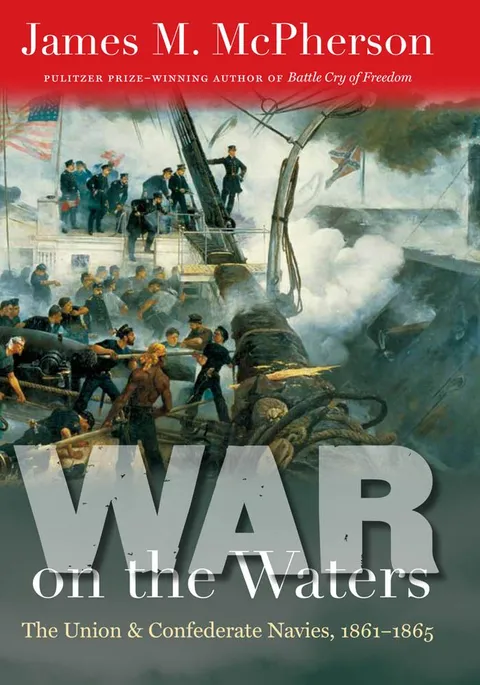
Although previously undervalued for their strategic impact because they represented only a small percentage of total forces, the Union and Confederate navies were crucial to the outcome of the Civil War. In War on the Waters, James M. McPherson has crafted an enlightening, at times harrowing, and ultimately thrilling account of the war's naval campaigns and their military leaders.
McPherson recounts how the Union navy's blockade of the Confederate coast, leaky as a sieve in the war's early months, became increasingly effective as it choked off vital imports and exports. Meanwhile, the Confederate navy, dwarfed by its giant adversary, demonstrated daring and military innovation. Commerce raiders sank Union ships and drove the American merchant marine from the high seas. Southern ironclads sent several Union warships to the bottom, naval mines sank many more, and the Confederates deployed the world's first submarine to sink an enemy vessel. But in the end, it was the Union navy that won some of the war's most important strategic victories -- as an essential partner to the army on the ground at Fort Donelson, Vicksburg, Port Hudson, Mobile Bay, and Fort Fisher, and all by itself at Port Royal, Fort Henry, New Orleans, and Memphis.
James M McPherson
James M. McPherson is the George Henry Davis 1886 Professor of History Emeritus at Princeton University. He has published many volumes on the Civil War, including the Pulitzer Prize-winning Battle Cry of Freedom, Crossroads of Freedom (which was a New York Times bestseller), Abraham Lincoln and the Second American Revolution, and For Cause and Comrades: Why Men Fought in the Civil War, which won the Lincoln Prize.
More by James M McPherson




Why Readwise Books?
Readwise Books is an ebook & audiobook platform that automatically logs how much you and your friends read, making it fun and easy to read more. Learn more →