Report an issue
Tell us what's wrong and we'll take a look.
Thanks – we got it. We'll review and follow up if needed.
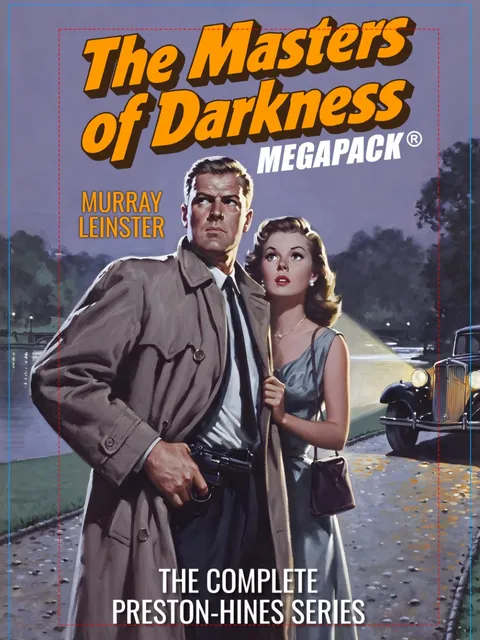
When the full moon vanishes above Central Park and a curtain of absolute blackness sends cars crashing, a police lieutenant and a newspaper reporter are the only witnesses willing to believe their eyes. The darkness is no natural eclipse. It is a weapon, demonstrated for a ruthless gangster by a scientist whose experiments have crossed from pure research into criminal opportunity.
Soon the city is caught between gunmen, a vanished inventor, and a device that can blot out light itself. As the authorities dismiss the impossible, a handful of unlikely allies race to understand the apparatus before it can be used for a larger, more devastating crime. But the man behind the darkness is always a step ahead, and every shadow may hide an ambush.
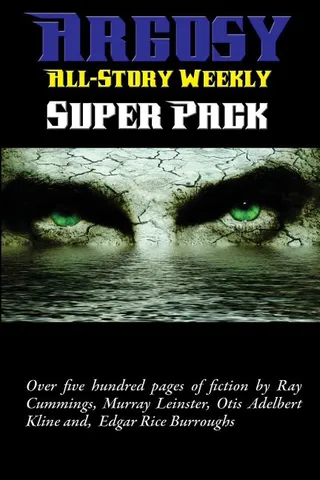
This collection of classic pulp science fiction also includes tales of cosmic menace, strange inventions, and desperate schemes that push ordinary people to the edge of the unknown.
Murray Leinster
Murray Leinster (June 16, 1896 - June 8, 1975) was a pen name used by William Fitzgerald Jenkins, an American writer of genre fiction, primarily science fiction. Leinster Jenkins, the son of George B. Jenkins and Mary L. Jenkins, was born in Norfolk, Virginia. His father was a bookkeeper. Despite the fact that both parents were born in Virginia, the family resided in Manhattan in 1910, according to the Federal Census. Despite being a high school dropout, he began working as a freelance writer before World War I. His debut tale, "The Foreigner," appeared in the May 1916 issue of H. L. Mencken's literary magazine The Smart Set, two months before his twentieth birthday. Leinster contributed 10 more tales in the magazine over the next three years; in a September 2022 interview, Leinster's daughter noted that Mencken advocated using a pseudonym for non-Smart Set work. Leinster served in the United States Army and the Committee of Public Information during World War I (1917-1918). His writing began to appear in pulp magazines such as Argosy, Snappy Stories, and Breezy Stories during and after the war. He continued to be published in Argosy into the 1950s.
More by Murray Leinster










Why Readwise Books?
Readwise Books is an ebook & audiobook platform that automatically logs how much you and your friends read, making it fun and easy to read more. Learn more →