Report an issue
Tell us what's wrong and we'll take a look.
Thanks – we got it. We'll review and follow up if needed.
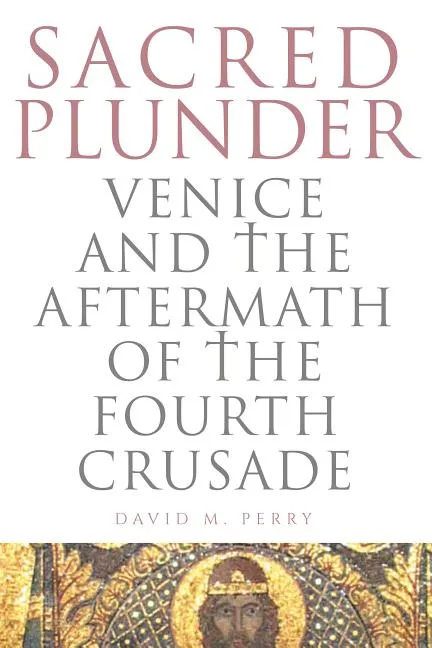
In Sacred Plunder, David Perry argues that plundered relics, and narratives about them, played a central role in shaping the memorial legacy of the Fourth Crusade and the development of Venice's civic identity in the thirteenth century. After the Fourth Crusade ended in 1204, the disputes over the memory and meaning of the conquest began. Many crusaders faced accusations of impiety, sacrilege, violence, and theft. In their own defense, they produced hagiographical narratives about the movement of relics--a medieval genre called translatio--that restated their own versions of events and shaped the memory of the crusade. The recipients of relics commissioned these unique texts in order to exempt both the objects and the people involved with their theft from broader scrutiny or criticism. Perry further demonstrates how these narratives became a focal point for cultural transformation and an argument for the creation of the new Venetian empire as the city moved from an era of mercantile expansion to one of imperial conquest in the thirteenth century.
David M. Perry
David M. Perry is a journalist, a medieval historian, and the associate director of undergraduate studies in the history department at the University of Minnesota. He was formerly a professor of history at Dominican University. Perry is the author of Sacred Plunder: Venice and the Aftermath of the Fourth Crusade and coauthor of The Bright Ages: A New History of Medieval Europe. His writing has appeared in the New York Times, the Washington Post, the Nation, the Atlantic, and on CNN.com, among other outlets. He and Gabriele co-write the newsletter Modern Medieval on Buttondown.
More by David M. Perry



Why Readwise Books?
Readwise Books is an ebook & audiobook platform that automatically logs how much you and your friends read, making it fun and easy to read more. Learn more →