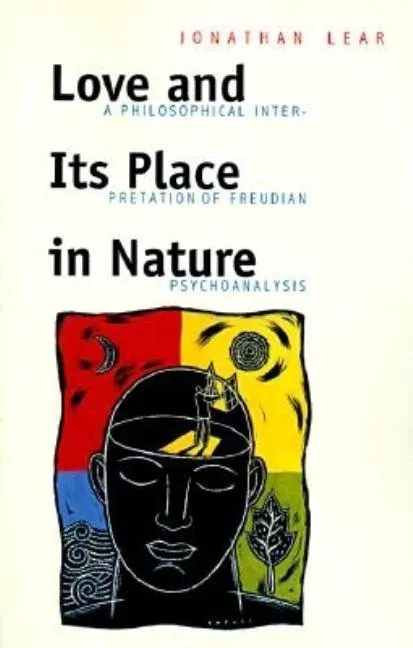
Love and Its Place in Nature
A Philosophical Interpretation of Freudian Psychoanalysis
Report an issue
Tell us what's wrong and we'll take a look.
Thanks – we got it. We'll review and follow up if needed.
"Lear makes one understand how psychoanalysis works not only on the therapist`s couch but also as a condition of being alive. . . . Love and Its Place in Nature not only offers a form of spiritual nutriment for the self, it also defines that self with a clear profundity that few readers will have encountered before."--Christopher Lehmann-Haupt, New York Times
"A brief and engaging philosophical perspective on Freudian psychoanalysis. The book is simply written, but important themes are profoundly investigated. . . . An important philosophic reading of Freud."--Don Browning, Christian Century
In this brilliant book, Jonathan Lear argues that Freud posits love as a basic force in nature, one that makes individuation--the condition for psychological health and development--possible. Love is active not just in the development of the individual but also in individual analysis and indeed in the development of psychoanalysis itself, says Lear. Expanding on philosophical conceptions of love, nature, and mind, Lear shows that love can cure because it is the force that makes us human.
Jonathan Lear
Jonathan Lear is John U. Nef Distinguished Service Professor in the Committee on Social Thought and the Department of Philosophy at the University of Chicago. His books include Radical Hope, Freud, and Wisdom Won from Illness.
More by Jonathan Lear







Why Readwise Books?
Readwise Books is an ebook & audiobook platform that automatically logs how much you and your friends read, making it fun and easy to read more. Learn more →