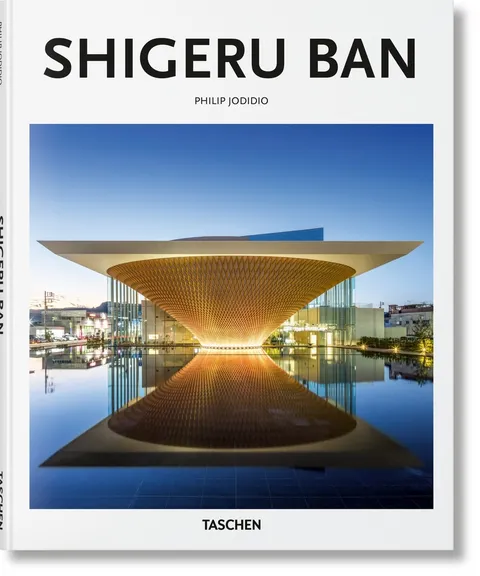
Shigeru Ban
Report an issue
Tell us what's wrong and we'll take a look.
Thanks – we got it. We'll review and follow up if needed.
From emergency relief shelters to a cardboard cathedral and exhibition spaces in shipping containers, Pritzker Prize-winning architect Shigeru Ban has made his name with his restlessly inventive response to material and situation, as much as with his humanitarian work at the sites of natural and man-made disasters. According to scholar Riichi Miyake, Ban's work represents "an architectural iteration of Doctors Without Borders."
In the spirit of three-dimensional poetry, Ban uses materials as an integral part of his design, selected not for their cutting-edge credentials but rather for their expressive ability, their capacity to convey the building's overall concept. In particular, Ban has made regular use of paper tubing in projects as varied as the Japanese Pavilion at Expo 2000 in Hanover and the Paper Log Houses in the Philippines, built after Typhoon Haiyan in November 2013.
This essential introduction, compiled with Ban's own collaboration, presents his most important projects to date, surveying the full reach and importance of, in the words of the Pritzker Prize jury, a "committed teacher who is not only a role model for younger generations, but also an inspiration."
Philip Jodidio
Philip Jodidio studied art history and economics at Harvard and edited Connaissance des Arts for over 20 years. His TASCHEN books include the Homes for Our Time series and monographs on numerous major architects, including Norman Foster, Tadao Ando, Renzo Piano, Jean Nouvel, and Zaha Hadid.
More by Philip Jodidio



Why Readwise Books?
Readwise Books is an ebook & audiobook platform that automatically logs how much you and your friends read, making it fun and easy to read more. Learn more →