Experience and Education
Report an issue
Tell us what's wrong and we'll take a look.
Thanks – we got it. We'll review and follow up if needed.
Analyzing both "traditional" and "progressive" education, Dr. Dewey here insists that neither the old nor the new education is adequate and that each is miseducative because neither of them applies the principles of a carefully developed philosophy of experience. Many pages of this volume illustrate Dr. Dewey's ideas for a philosophy of experience and its relation to education. He particularly urges that all teachers and educators looking for a new movement in education should think in terms of the deeped and larger issues of education rather than in terms of some divisive "ism" about education, even such an "ism" as "progressivism." His philosophy, here expressed in its most essential, most readable form, predicates an American educational system that respects all sources of experience, on that offers a true learning situation that is both historical and social, both orderly and dynamic.
John Dewey
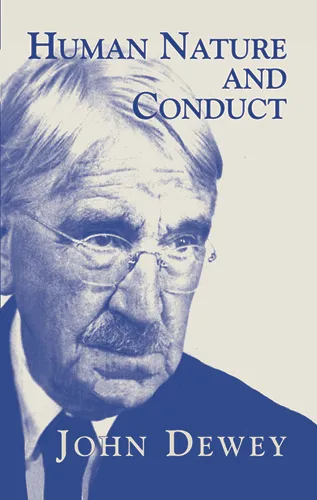
John Dewey (1859-1952) was an American philosopher, psychologist, and educator and a leading figure in pragmatism. His work explored democracy, education, experience, ethics, inquiry, and the relationship between individuals and social institutions.John Dewey wrote within the literary and intellectual conditions of the late nineteenth or early twentieth century, and Human Nature and Conduct reflects the concerns that made the author's work distinctive. The book's combination of habit, impulse, intelligence places it within a broader career concerned with how individuals act under social, moral, economic, psychological, or political pressure.Readers approaching this work today can therefore see it both as a self-contained book and as part of a larger body of writing shaped by its period. Modern editions should preserve the historical text while distinguishing later introductions, revisions, illustrations, or editorial additions from the author's original work.
More by John Dewey






Why Readwise Books?
Readwise Books is an ebook & audiobook platform that automatically logs how much you and your friends read, making it fun and easy to read more. Learn more →