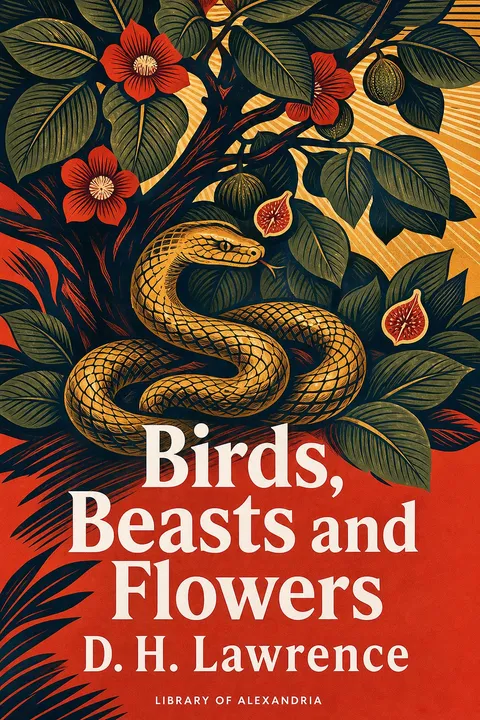
Birds, Beasts and Flowers
Nature Poetry of Instinct, Sensuality, and the Sacred in Everyday Life
Report an issue
Tell us what's wrong and we'll take a look.
Thanks – we got it. We'll review and follow up if needed.
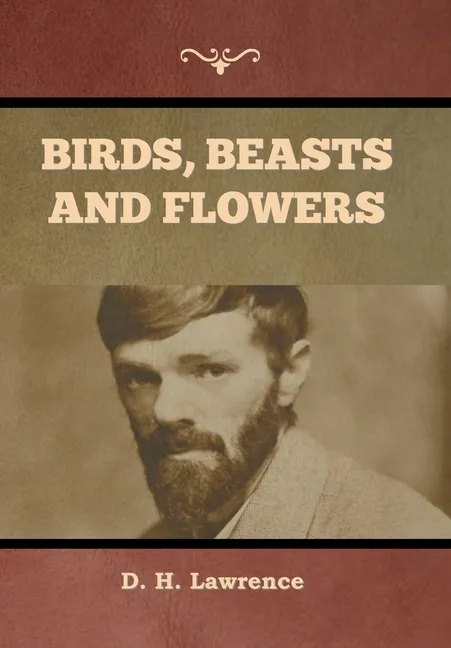
What happens when the natural world refuses to remain a backdrop to human life? These poems meet its beauty, strangeness, and power on their own terms.
Published in 1923, D. H. Lawrence's Birds, Beasts and Flowers turns encounters with animals and plants into searching explorations of instinct, desire, and the sacred. A snake at a water trough, the hidden richness of a fig, and the deliberate movements of tortoises become occasions for wonder and discomfort. Lawrence looks closely at living things while questioning the human impulse to judge and master them.
This is nature poetry with an uneasy edge. Sensuous language and flexible rhythms bring the physical world near, but the creatures Lawrence observes retain their distance and mystery. In Snake, admiration comes into conflict with learned fear; elsewhere, animal life challenges human assumptions about consciousness and belonging. The collection endures because its questions remain urgent: how can we attend to other forms of life without reducing them to reflections of ourselves?
What readers find inside:
- Unforgettable encounters - Animals and plants emerge as presences with lives beyond human concerns.
- Instinct and conflict - The poems explore tensions between immediate feeling and the habits taught by society.
- Sensuous observation - Texture, movement, colour, and bodily awareness give abstract questions a physical life.
- The sacred in nature - Lawrence searches for spiritual significance within earthly existence rather than apart from it.
- A questioning human voice - Wonder, hesitation, and self-reproach complicate the speaker's relationship with the world he observes.
For readers of nature writing, lovers of twentieth-century poetry, and anyone drawn to the meeting of ecology and spiritual inquiry, this collection offers both pleasure and provocation.
Begin with a single encounter and discover how much of the living world escapes our familiar ways of seeing.
D. H. Lawrence
David Herbert (D. H.) Lawrence was a prolific English novelist, essayist, poet, playwright, literary critic and painter. His most notable works include Lady Chatterley’s Lover, The Rainbow, Sons and Lovers and Women in Love.
More by D. H. Lawrence






Why Readwise Books?
Readwise Books is an ebook & audiobook platform that automatically logs how much you and your friends read, making it fun and easy to read more. Learn more →