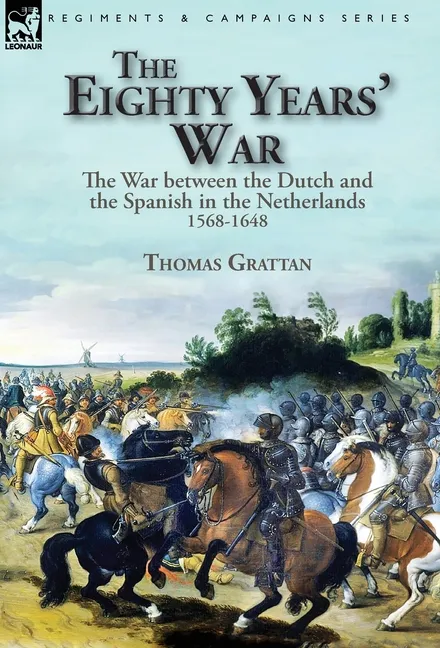
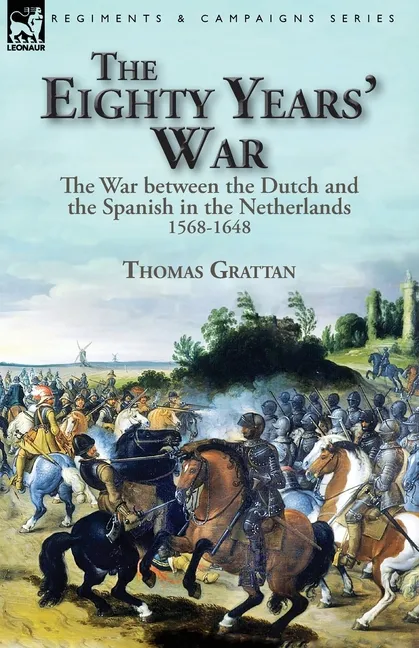
The Eighty Years' War
the War between the Dutch and the Spanish in the Netherlands, 1568-1648
Report an issue
Tell us what's wrong and we'll take a look.
Thanks – we got it. We'll review and follow up if needed.
The great war in Europe of the 16th and 17th centuries
King Philip II of Spain became the monarch of the Hapsburg Netherlands, which included territory in modern day Holland, Belgium and Luxembourg, by the decree of Charles V, the Holy Roman Emperor. While the legitimacy of this act may have been indisputable according to the principles of 'absolutist divine right' the relationship between the new monarch and his subjects soon descended into acrimony because Spain was far from the Netherlands and France lay between the two nations making effective rule problematic. Furthermore, the Dutch had accepted the Protestant Reformation which eschewed papal authority whilst Spain remained staunchly Catholic. The oppressed northerners yearned for independence from everything they believed alien and before long the seventeen provinces rose in rebellion. There followed a long period of conflict which spanned the reigns of successive Spanish monarchs, drew in France, Scotland, the England of Elizabeth I and involved religious divisions which, as usual, justified the brutal excesses of sectarianism. The war brought forth soldiers of fortune of great talent and the redoubtable Spanish infantry tercios to the fields of conflict. Finally the Dutch prevailed, won their freedom and established a republic which heralded the 'Dutch Golden Age'. This intriguing history, which has been taken from Grattan's broader work on the history of the Netherlands by the Leonaur Editors, specifically describes the painful birth of what became a modern European nation.
Leonaur editions are newly typeset and are not facsimiles; each title is available in softcover and hardback with dustjacket.
Thomas Colley Grattan
Thomas Colley Grattan (1792-4 July 1864) was a novelist, poet, historian, and diplomat from Ireland. Born in Dublin, he attended law school but never practiced. He created a few novels, including The Heiress of Bruges (4 volumes, 1830), but his biggest work was Highways and Byways, an account of his Continental travels in three series totaling eight volumes. He also published a history of the Netherlands and several works about the United States. He served as British Consul in Boston, Massachusetts, and was involved in the discussions that led to the Webster-Ashburton Treaty in 1842. Grattan was the son of Colley Grattan of Clayton Lodge, County Kildare, who was a lawyer in Dublin before becoming a farmer. Grattan was a member of the Anglo-Irish Protestant Ascendancy, and he was related to both the Irish politician Henry Grattan and the Duke of Wellington. Reverend Henry Bristow schooled him in Athy before sending him to Dublin to study law. He then agreed to join the Louth militia. While stationed in Waterford in 1810, he met actor Edmund Kean after seeing a production of Hamlet. Grattan composed a play for him years later when they became friends.
More by Thomas Colley Grattan





Why Readwise Books?
Readwise Books is an ebook & audiobook platform that automatically logs how much you and your friends read, making it fun and easy to read more. Learn more →