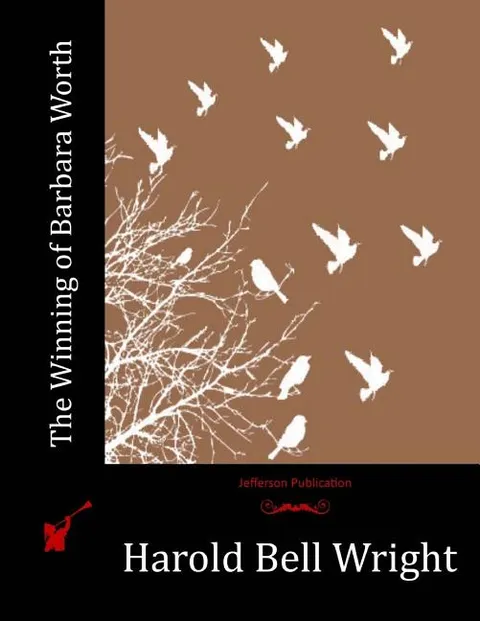
The Winning of Barbara Worth
Report an issue
Tell us what's wrong and we'll take a look.
Thanks – we got it. We'll review and follow up if needed.


Jefferson Worth's outfit of four mules and a big wagon pulled out of San Felipe at daybreak, headed for Rubio City. From the swinging red tassels on the bridles of the leaders to the galvanized iron water bucket dangling from the tail of the reach back of the rear axle the outfit wore an unmistakable air of prosperity. The wagon was loaded only with a well-stocked "grub-box," the few necessary camp cooking utensils, blankets and canvas tarpaulin, with rolled barley and bales of hay for the team, and two water barrels-empty. Hanging by its canvas strap from the spring of the driver's seat was a large, cloth-covered canteen. Behind the driver there was another seat of the same wide, comfortable type, but the man who held the reins was apparently alone. Jefferson Worth was not with his outfit.
Harold Bell Wright
American writer Harold Bell Wright (1872-1944) is well recognised for his widely read books from the early 20th century. Wright was born in Rome, New York, on May 4, 1872, and was raised in a creative and devout household. After gaining an interest in ministry while attending Ohio's Hiram College, he went on to study at Boston University Theological School. Wright served as a pastor in a number of places, but he decided to focus on writing because of health problems. After "The Shepherd of the Hills," his breakout book, was released in 1907 and became an enormous hit, he became a well-known and successful writer. The Ozark Mountains served as the setting for this book, which centred on themes of atonement, forgiveness, and the consequences of previous deeds. Throughout his life, Wright's novels were widely read, and he became very well-known. But occasionally, his paintings were criticised for being too emotional. In spite of this, he had a big influence on American literature in the early 20th century.
More by Harold Bell Wright








Why Readwise Books?
Readwise Books is an ebook & audiobook platform that automatically logs how much you and your friends read, making it fun and easy to read more. Learn more →