Freedom by the Sword
The U.S. Colored Troops 1862-1867
Report an issue
Tell us what's wrong and we'll take a look.
Thanks – we got it. We'll review and follow up if needed.
The Civil War changed the United States in many ways-economic, political, and social. Of these changes, none was more important than Emancipation. Besides freeing nearly 4 million slaves, it brought agricultural wage labor to a reluctant South and gave a vote to black adult males in the former slave states. It also offered former slaves of both sexes new opportunities in education and property ownership. Just as striking were the effects of the war on the United States Army. From late 1862 to the spring of 1865, the federal government accepted more than 180,000 black men as soldiers, something it had never done before on such a scale. Known collectively as the United States Colored Troops and organized in segregated regiments led by white officers, some of these soldiers guarded army posts along major rivers; others fought Confederate raiders to protect Union supply trains; and still others took part in major operations like the siege of Petersburg and the battle of Nashville. After the war, many of the black regiments garrisoned the former Confederacy to enforce federal Reconstruction policy. Freedom by the Sword tells the story of these soldiers' recruitment, organization, and service. Because of the book's broad focus on every theater of the war and its concentration on what black soldiers actually contributed to Union victory, this volume stands alone among histories of the U.S. Colored Troops.








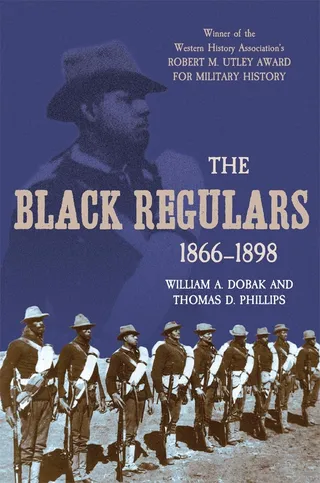
William a Dobak
William A. Dobak, retired from the National Archives, Washington, D.C., is the author of Fort Riley and Its Neighbors: Military Money and Economic Growth, 1853-1895 and Freedom by the Sword: The U.S. Colored Troops, 1862-1867.
More by William a Dobak


Why Readwise Books?
Readwise Books is an ebook & audiobook platform that automatically logs how much you and your friends read, making it fun and easy to read more. Learn more →