Report an issue
Tell us what's wrong and we'll take a look.
Thanks – we got it. We'll review and follow up if needed.
A foundational work on banking, credit, and financial stability, offering a clear explanation of how money markets function and respond to crisis.
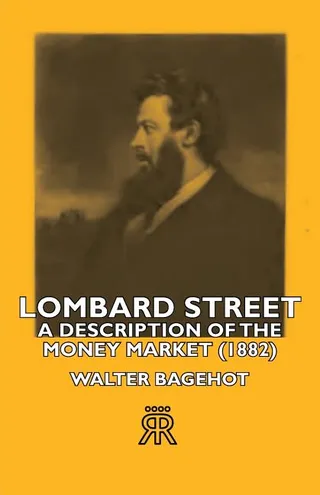
In Lombard Street, Walter Bagehot examines the structure and operation of the nineteenth-century British money market, providing a detailed account of how banks, credit systems, and financial institutions interact. Best known for articulating principles of central banking during periods of financial panic, Bagehot explains the role of liquidity, trust, and institutional responsibility in maintaining economic stability.
Though grounded in the financial system of his time, the book remains highly relevant, frequently cited for its insights into crisis management and the responsibilities of central banks. Clear, direct, and analytical, Lombard Street continues to serve as an essential introduction to the mechanics of banking and financial markets.
Walter Bagehot
Walter Bagehot (1826–1877) was an English businessman and journalist. He founded the National Review in 1855 with Richard Holt Hutton before becoming editor in chief of the Economist, a post he held for seventeen years.
More by Walter Bagehot









Why Readwise Books?
Readwise Books is an ebook & audiobook platform that automatically logs how much you and your friends read, making it fun and easy to read more. Learn more →