Report an issue
Tell us what's wrong and we'll take a look.
Thanks – we got it. We'll review and follow up if needed.
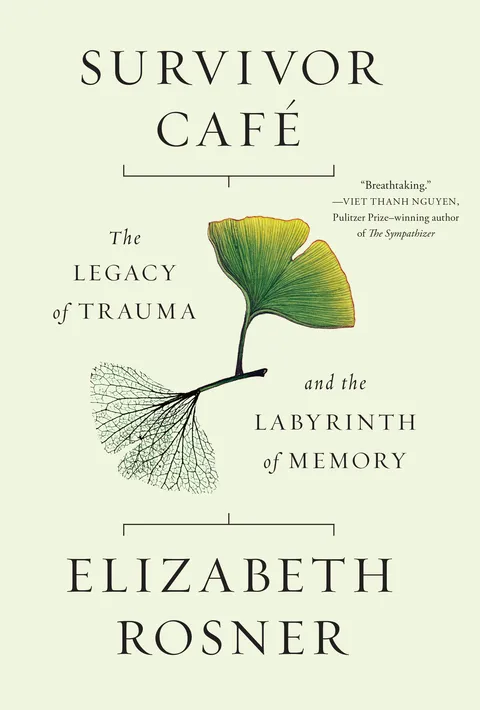
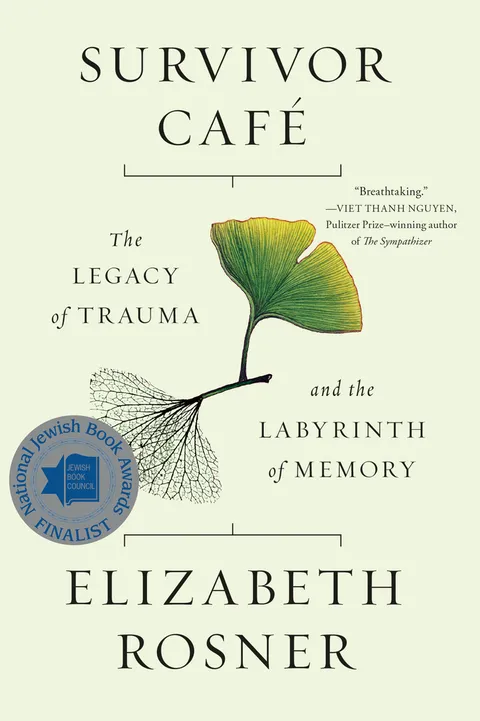
An "impressive, highly readable" exploration of "atrocity, trauma, and memory" that examines the legacies of the Holocaust, Hiroshima, and other mass trauma events--"a powerful book" (Viet Thanh Nguyen, Pulitzer Prize-winning author of The Sympathizer).
As firsthand survivors of many of the 20th century's most monumental events--the Holocaust, Hiroshima, the Killing Fields--begin to pass away, Survivor Café addresses urgent questions: How do we carry those stories forward? How do we collectively ensure that the horrors of the past are not forgotten?
Elizabeth Rosner organizes her book around three trips with her father to Buchenwald concentration camp--in 1983, in 1995, and in 2015--each journey an experience in which personal history confronts both commemoration and memorialization. She explores the echoes of similar legacies among descendants of African American slaves, descendants of Cambodian survivors of the Killing Fields, descendants of survivors of the bombing of Hiroshima and Nagasaki, and the effects of 9/11 on the general population. Examining current brain research, Rosner depicts the efforts to understand the intergenerational inheritance of trauma, as well as the intricacies of remembrance in the aftermath of atrocity. Survivor Café becomes a lens for numerous constructs of memory--from museums and commemorative sites to national reconciliation projects to small-group cross-cultural encounters.
Beyond preserving the firsthand testimonies of participants and witnesses, individuals and societies must continually take responsibility for learning the painful lessons of the past in order to offer hope for the future. Survivor Café offers a clear-eyed sense of the enormity of our 21st-century-human inheritance--not only among direct descendants of the Holocaust but also in the shape of our collective responsibility to learn from tragedy, and to keep the ever-changing conversations alive between the past and the present.
"Each page is imbued with urgency, with sincerity, with heartache, with heart . . . [Rosner's] words, alongside the words of other survivors of atrocity and their descendants across the globe, can help us build a more humane world."
--San Francisco Chronicle
Elizabeth Rosner
Elizabeth Rosner's work focuses on the redemptive power of storytelling and deep listening. Her six books have been translated into twelve languages and have received literary prizes in the US and abroad. Third Ear: Reflections on the Art and Science of Listening, blends personal stories of growing up in a multilingual household with multidisciplinary research about sound and silence in the natural world. Survivor Café The Legacy of Trauma and the Labyrinth of Memory, was a finalist for a National Jewish Book Award, and was featured by NPR and in the NY Times. Her first novel, The Speed of Light, won Hadassah Magazine's Ribalow Prize in 2002, judged by Elie Wiesel. Her poetry collection, Gravity, originally published in 2014, was reissued in 2026, followed by bilingual editions in Spain, Germany, and Italy. Based in Northern California, Elizabeth coaches writers privately and leads workshops internationally; her teaching carries forward a message of perseverance and tenacious optimism. www.elizabethrosner.com
More by Elizabeth Rosner



Why Readwise Books?
Readwise Books is an ebook & audiobook platform that automatically logs how much you and your friends read, making it fun and easy to read more. Learn more →