Report an issue
Tell us what's wrong and we'll take a look.
Thanks – we got it. We'll review and follow up if needed.
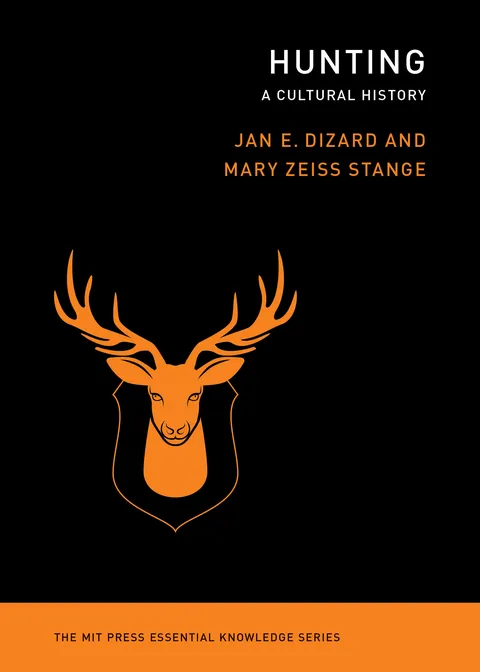
The history of hunting, from Stone Age hunter-gatherers to today’s sport hunters.
Hunting has a long history, beginning with our hominid ancestors. The invention of the spear allowed early humans to graduate from scavenging to actual hunting. The famous cave paintings at Lascaux show a meticulous knowledge of animal behavior and anatomy that only a hunter would have. This volume in the MIT Press Essential Knowledge series traces the evolution of hunting, from Stone Age hunting and gathering to today’s regulated sport hunting.
Humans have been hunting since we became human—but did hunting make us human? The authors consider and question the “hunting hypothesis of human origins,” noting that according to this theory, “hunting” meant hunting by men. They explore hunting in the Stone Age and how, beginning some ten thousand years ago, the spread of agriculture led to the emergence of empires and attempts by elites to monopolize hunting. They examine the democratization of hunting in the American colonies and how hunters decimated, but then, in the twentieth century, rallied to save game animals from extinction. They describe how some European and postcolonial societies have managed wildlife and hunting, consider the difficulties of living with abundant wildlife—even as many nongame species are disappearing—and trace the implications of the increasing participation of women in hunting for the future of hunting.
Jan E Dizard
Jan E. Dizard is Charles Hamilton Houston Professor of American Culture at Amherst College. He is the author of numerous books, most recently Going Wild: Hunting, Animal Rights, and the Contested Meaning of Nature.
More by Jan E Dizard
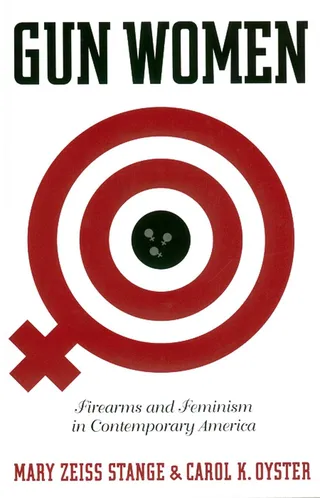
Mary Zeiss Stange
My primary field of preparation is the history of Christianity, particularly post-Enlightenment. My teaching interests are intrinsically cross-disciplinary. In religion they include religion and culture studies, contemporary American religion, theology, religion and ecology, and feminist studies in religion. In addition to teaching in the religion curriculum, I also teach courses on feminist theories and methodologies, ecofeminism, and global and transnational feminism. In my pedagogy, as in my research and writing, I therefore move freely among women’s and gender studies, environmental studies and international affairs.
More by Mary Zeiss Stange





Why Readwise Books?
Readwise Books is an ebook & audiobook platform that automatically logs how much you and your friends read, making it fun and easy to read more. Learn more →