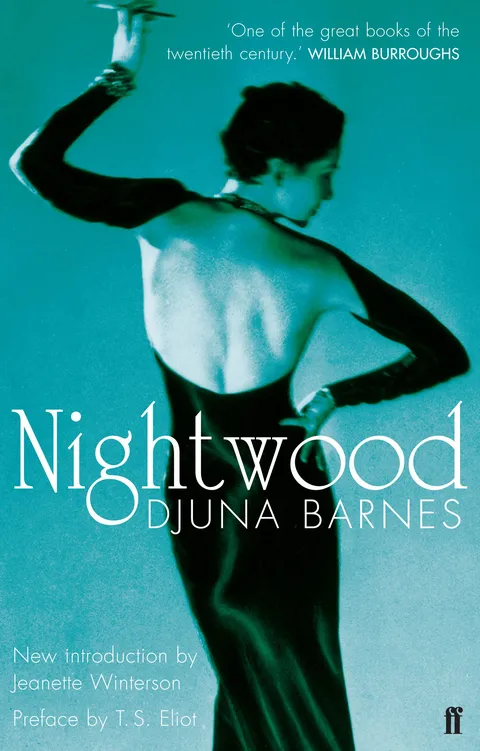
Nightwood
Report an issue
Tell us what's wrong and we'll take a look.
Thanks – we got it. We'll review and follow up if needed.
Lose yourself in the tortured love lives of expats in 1920s Paris in this iconic cult classic.
'Nightwood is itself. It is its own created world, exotic and strange, and reading it is like drinking wine with a pearl dissolving in the glass ... From now on, a part of you is pearl-lined.' Jeanette Winterson
'Like a dark lesbian genius rolling in a giant heap of damp, dead leaves. What a great, shaking, grieving party this book is - the best.' Eileen Myles
'I read with the aching intensity of a person possessed ... The story of passion and grief, of exile and loneliness, spoke directly to me, a young woman who [never] felt she quite belonged ... A hymn to the dispossessed, the misbegotten and those who love too much.' Siri Hustvedt
Nightwood tells the stories of the love-lives of a group of American expats and Europeans in Paris in the 1920s - an exotic, night-time underworld, eccentric, seedy and beautiful. A modernist masterpiece, and one of the earliest novels to explicitly portray homosexuality, the influence of Djuna Barnes's novel remains exceptional.
'A bold, exceptionally well-written modernist prose poem ... The closest thing to James Joyce.' Andre Aciman
'The great achievement of a style, the beauty of phrasing, the brilliance of wit and characterisation, and a quality of horror and doom very nearly related to that of Elizabethan tragedy.' T.S. Eliot
'One of the greatest books of the twentieth century.' William S. Burroughs
'A writer of wild and original gifts . To her name there is always to be attached the splendor of Nightwood, a lasting achievement of her great gifts and eccentricities - her passionate prose and, in this case, a genuineness of human passions.' Elizabeth Hardwick
Djuna Barnes
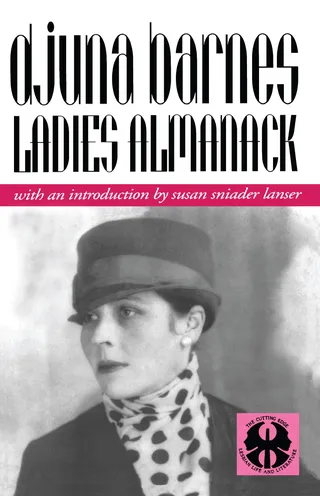
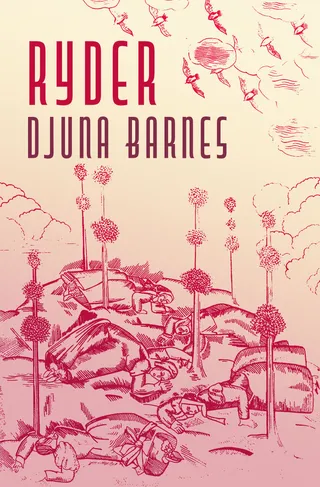
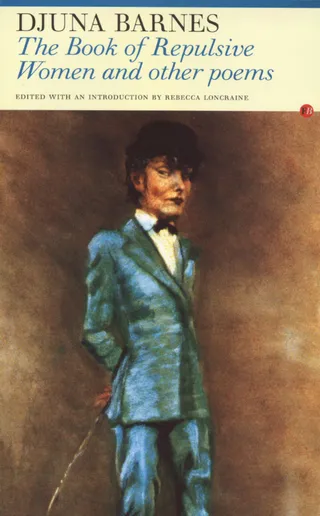
Djuna Barnes was an American modernist writer and visual artist. Her hugely successful novel Nightwood (1936) has become a cult classic of lesbian fiction. Barnes began her career as a journalist and illustrator for the Brooklyn Daily Eagle in 1913. Within a year, Barnes was a highly-sought features reporter and interviewer whose work appeared in the New York City’s leading newspapers and periodicals. Later, Barnes became part of Greenwich Village’s Bohemian community and began publishing her prose, poems, illustrations, and one-act plays in both avant-garde literary journals and popular magazines. She published her first illustrated volume of poetry, The Book of Repulsive Women, in 1915. In 1921, she left New York for Paris, where she published three more works: A Book (1923), Ladies Almanack (1928), and Ryder (1928).
More by Djuna Barnes







Why Readwise Books?
Readwise Books is an ebook & audiobook platform that automatically logs how much you and your friends read, making it fun and easy to read more. Learn more →