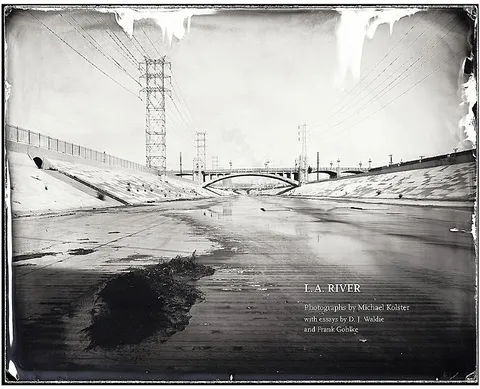
L.A. River
Report an issue
Tell us what's wrong and we'll take a look.
Thanks – we got it. We'll review and follow up if needed.
Michael Kolster, in L.A. River, relies on a nineteenth-century photographic technology to render the Los Angeles River today, from its headwaters in Canoga Park and the suburbs of the San Fernando Valley to its mouth at the Pacific Ocean in Long Beach. Coincidentally, the founding of the city of Los Angeles and California's achievement of statehood in 1850 coincide historically with the invention of the wet-plate photographic process, forever linking the city and state with the centrality of photography. The moving images that define L.A. River show a feature of the city's landscape that initially attracted native peoples to its banks and gave rise to the formation of our nation's second-largest city.
Channeled in concrete during the last century to control flooding, the river was all but removed from the life of the city until the turn of the twenty-first century, when concerted efforts were made by some to peel back some of the concrete and to let nature live once again. In his photographic journey, Kolster considers both the past and present and how the accumulation of life along the river suggests a larger a role for the L.A. River in the lives of the city's inhabitants.


Why Readwise Books?
Readwise Books is an ebook & audiobook platform that automatically logs how much you and your friends read, making it fun and easy to read more. Learn more →