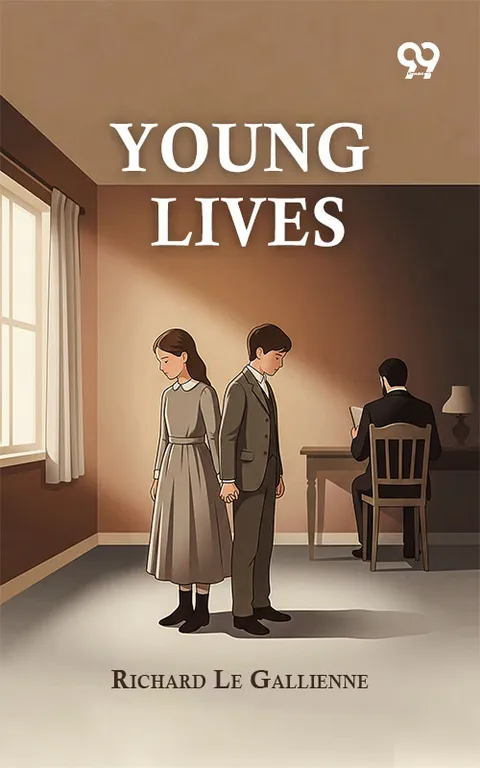
Young Lives
Report an issue
Tell us what's wrong and we'll take a look.
Thanks – we got it. We'll review and follow up if needed.

Young Lives follows a household shaped by rigid values and emotional restraint, where younger members struggle to define themselves against inherited expectations. The story explores generational pressure, moral discipline, and the quiet rebellion that grows when individuality is suppressed. Domestic space becomes a field of conflict between authority and self expression, with everyday interactions revealing deeper needs for recognition and freedom. The narrative studies how control, affection, and misunderstanding operate within family structure, showing how guidance can become limitation when empathy is absent. Attention is given to emotional awakening, private ambition, and the search for personal voice within a tightly ordered environment. Social manners and respectability are contrasted with inner unrest and creative longing. The work reflects on growth, identity, and emotional honesty, suggesting that maturity requires both separation and understanding. Tone blends sensitivity with reflective critique, presenting youth as a period of testing boundaries and forming convictions under watchful tradition.
Richard Le Gallienne
Richard Le Gallienne was an English writer and poet. Eva Le Gallienne, a British-American actress, was his daughter from his second marriage to Danish journalist Julie Nørregaard (1863-1942). Richard Thomas Gallienne was born in West Derby, Liverpool, England, the eldest son of Jean ("John") Gallienne (1843-1929), manager of the Birkenhead Brewery, and his wife Jane (1839-1910), née Smith. He attended Liverpool College, which was an all-boys public school at the time. After finishing school, he changed his name to Le Gallienne and began working at an accountant's office in London. In 1883, his father took him to an Oscar Wilde lecture in Birkenhead. Mildred Lee, Richard's first wife, and Maria, their second daughter, died during childbirth in 1894, leaving Richard and their daughter Hesper Joyce. Following Mildred's death, he carried an urn holding her ashes with him at all times, including when married to his second wife. Rupert Brooke, who met Le Gallienne on a ship going for the United States in 1913 but did not warm to him, composed a brief poem called "For Mildred's Urn" to mock this behavior.
More by Richard Le Gallienne








Why Readwise Books?
Readwise Books is an ebook & audiobook platform that automatically logs how much you and your friends read, making it fun and easy to read more. Learn more →