Report an issue
Tell us what's wrong and we'll take a look.
Thanks – we got it. We'll review and follow up if needed.
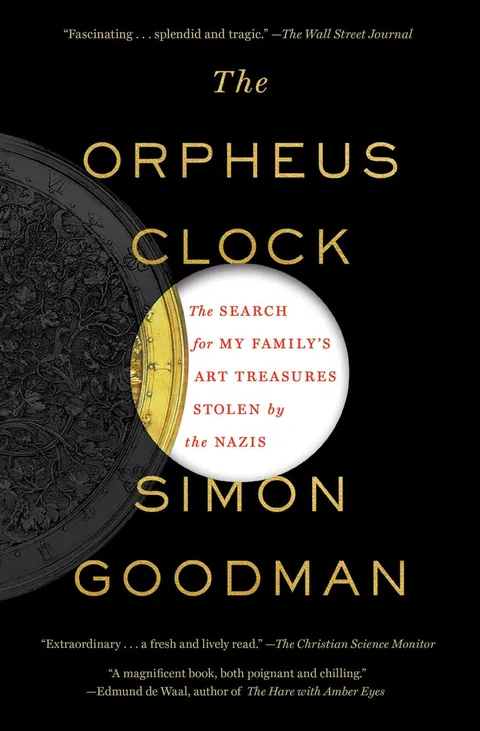
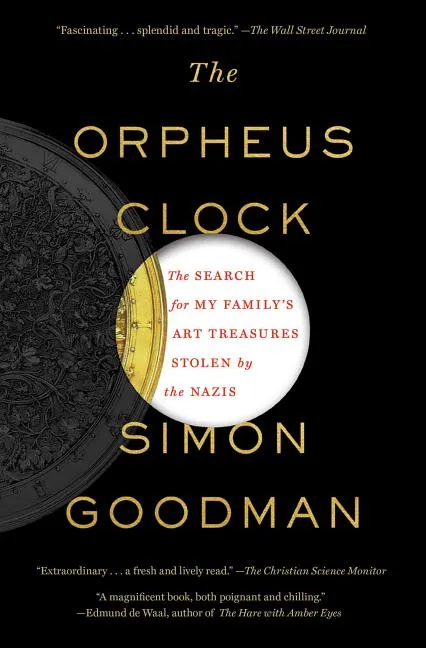
Simon Goodman's grandparents came from German-Jewish banking dynasties and perished in concentration camps. And that's almost all he knew about them--his father rarely spoke of their family history or heritage. But when his father passed away, and Simon received his old papers, a story began to emerge.
The Gutmanns, as they were known then, rose from a small Bohemian hamlet to become one of Germany's most powerful banking families. They also amassed a magnificent, world-class art collection that included works by Degas, Renoir, Botticelli, Guardi, and many, many more. But the Nazi regime snatched from them everything they had worked to build: their remarkable art, their immense wealth, their prominent social standing, and their very lives. Only after his father's death did Simon begin to piece together the clues about the Gutmanns' stolen legacy and the Nazi looting machine. With painstaking detective work across two continents, Simon has been able to prove that many works belonged to his family and successfully secure their return.
"Fascinating...splendid and tragic" (The Wall Street Journal), "Goodman's story is alternately wrenching and inspiring...An emotional tale of unspeakable horrors, family devotion, and art as a symbol of hope" (Kirkus Reviews). It is not only the account of a twenty-year detective hunt for family treasure, but an unforgettable tale of redemption and restoration.
Simon Goodman
Simon Goodman is a Senior Lecturer in Psychology at De Montfort University, Leicester. He uses discursive and rhetorical psychology in his research to address a number of issues. Much of this research explores the discursive construction of asylum seekers and refugees in which he has focussed on the ways in which potentially prejudicial arguments against asylum seekers are presented as 'reasonable' and non-prejudicial. Some of his other work focuses on what is, and what is not, considered to be racist, particularly with regard to asylum seeking. This has led to an interest in how people use, support and challenge hate talk in a range of different areas of prejudice. His research also explores the (largely negative) experiences of asylum seekers in the UK and the ways in which they make complaints and resist their negative presentations. His other interests include the British public's understanding of income inequality and high earners, the ways in which the far-right attempt to present their policies as acceptable and non-racist, as well as negative representations of Gypsies in online discussion forums and responses to the England riots. He is currently chair of the British Psychological Society's Qualitative Methods in Psychology Section. He is the Critical Social Psychology section editor of the Social and Personality Psychology compass and is a co-author of The Language of Asylum published by Palgrave.
More by Simon Goodman













Why Readwise Books?
Readwise Books is an ebook & audiobook platform that automatically logs how much you and your friends read, making it fun and easy to read more. Learn more →