Report an issue
Tell us what's wrong and we'll take a look.
Thanks – we got it. We'll review and follow up if needed.
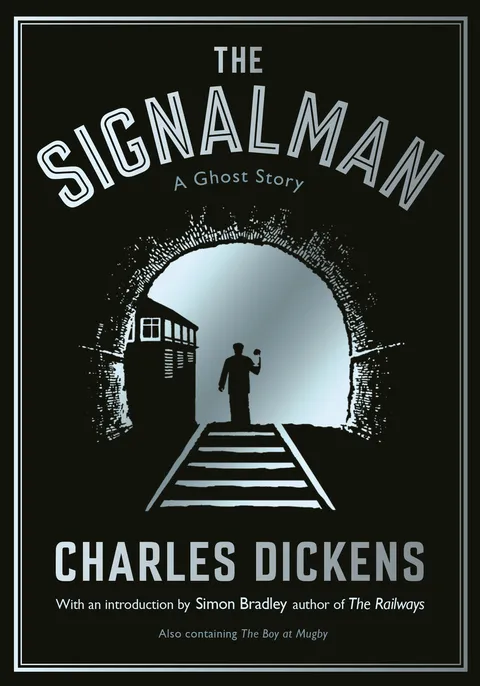
On the 9th of June 1865, Charles Dickens was travelling aboard the Folkestone to London Boat Train with his mistress and her mother, when it derailed while crossing a viaduct near Staplehurst in Kent. The train plunged down a bank into a dry river bed, killing ten passengers, and badly wounding forty.
Dickens was profoundly affected by the disaster, and a year later, he published The Signalman, a supremely atmospheric ghost story in which the narrator, while investigating a dank and lonely railway cutting, meets the signalman who works there. His new acquaintance appears to live under the shadow of an unbearable secret, haunted by an apparition whose appearance prefigures terrible rail accidents.
Drawing on Dickens own experiences, and introduced by Simon Bradley, author of The Railways, The Signalman is both an important piece of rail history, and a sinister tale which will make you think twice next time you enter the quiet carriage.
Charles Dickens
Charles Dickens was born in 1812 near Portsmouth where his father was a clerk in the navy pay office. The family moved to London in 1823, but their fortunes were severely impaired. Dickens was sent to work in a blacking-warehouse when his father was imprisoned for debt. Both experiences deeply affected the future novelist. In 1833 he began contributing stories to newspapers and magazines, and in 1836 started the serial publication of Pickwick Papers. Thereafter, Dickens published his major novels over the course of the next twenty years, from Nicholas Nickleby to Little Dorrit. Dickens died in June 1870.
More by Charles Dickens











Why Readwise Books?
Readwise Books is an ebook & audiobook platform that automatically logs how much you and your friends read, making it fun and easy to read more. Learn more →