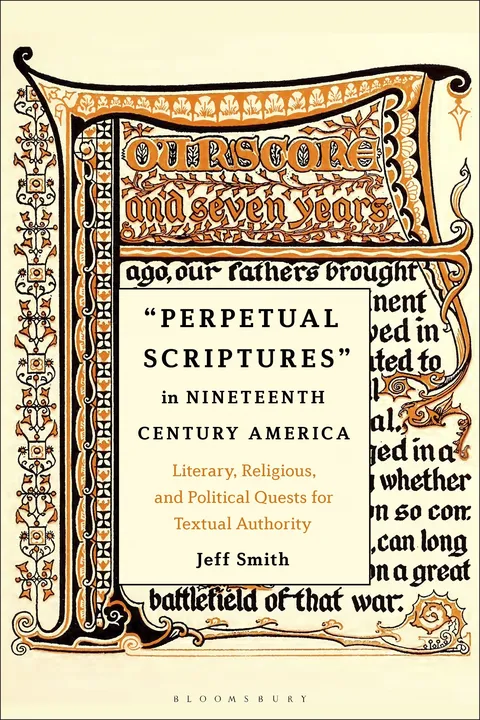
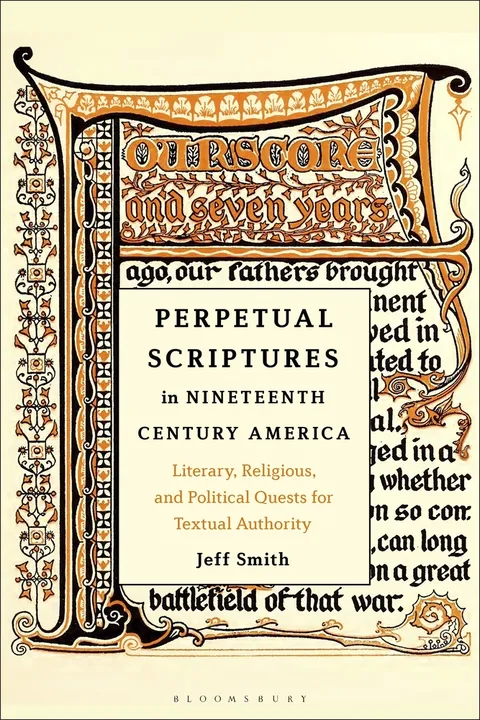
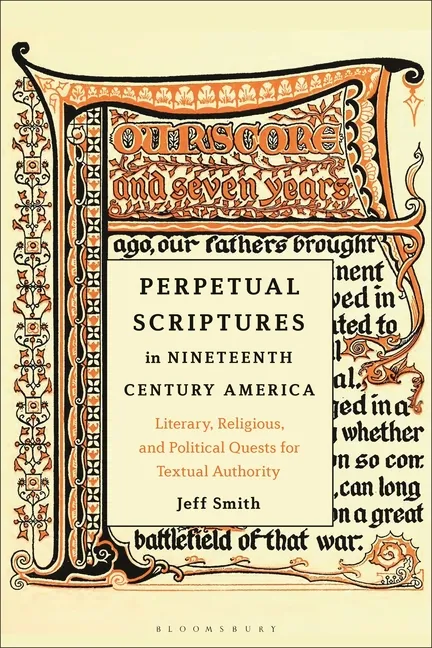
Perpetual Scriptures in Nineteenth-Century America
Literary, Religious, and Political Quests for Textual Authority
Report an issue
Tell us what's wrong and we'll take a look.
Thanks – we got it. We'll review and follow up if needed.
In the tumultuous decades of rapid expansion and change between the American Founding and the Civil War, Americans confronted a cluster of overlapping crises whose common theme was the difficulty of finding authority in written texts. The issue arose from several disruptive developments: rising challenges to the traditional authority of the Bible in a society that was intensely Protestant; persistent worries over America's lack of a “national literature” and an independent cultural identity; and the slavery crisis, which provoked tremendous struggles over clashing interpretations of the Declaration of Independence and the Constitution, even as these “parascriptures” were rising to the status of a kind of quasi-sacred secular canon.
At the same time but from the opposite direction, new mass media were creating a new, industrial-scale print culture that put a premium on very non-sacred, disposable text: mass-produced “news,” dispensed immediately and in huge quantities but meant only for the day or hour. Perpetual Scriptures in Nineteenth-Century America identifies key features of the writings, careers and cultural politics of several prominent Americans as responses to this cluster of challenges. In their varied attempts to vindicate the sacred and to merge the timeless with the urgent present, Joseph Smith, Ralph Waldo Emerson, Margaret Fuller, Theodore Parker, Harriet Beecher Stowe, Walt Whitman, Frederick Douglass, Martin Delany, Abraham Lincoln, and other religious and political leaders and men and women of letters helped define American literary culture as an ongoing quest for new “bibles,” or what Emerson called a “perpetual scripture.”
Jeff Smith
Jeff Smith is a Professor of Film Studies in the Department of Communication Arts at the University of Wisconsin--Madison, where he earned his Ph.D. He is the author of two books: The Sounds of Commerce: Marketing Popular Film
Music (1998) and Film Criticism, the Cold War, and the Blacklist: Reading the Hollywood Reds (2014). He has also published several articles and book chapters on the role of sound and music in American cinema. He is currently at work on a book that traces development of the classical Hollywood film score during the 1930s that examines how studios allocated musical resources to films based on their position within the hierarchy of prestige pictures, programmers, and "B" films.
More by Jeff Smith









Why Readwise Books?
Readwise Books is an ebook & audiobook platform that automatically logs how much you and your friends read, making it fun and easy to read more. Learn more →