Report an issue
Tell us what's wrong and we'll take a look.
Thanks – we got it. We'll review and follow up if needed.
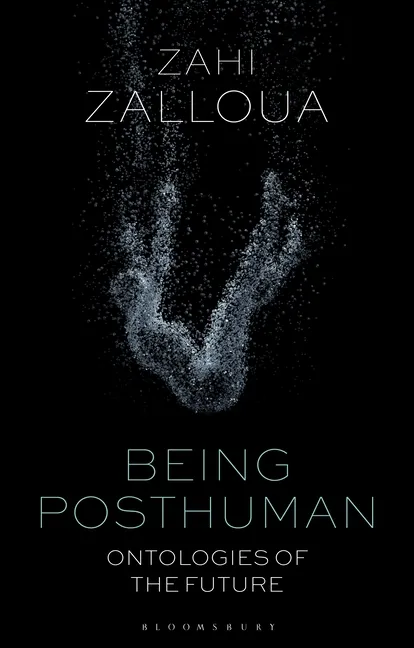
Posthumanism is both a descriptive and a prescriptive term. Firstly, it registers a shift beginning in the late 1960s and epitomized by Foucault's “the death of Man”. Secondly, it refers to the future and a new relationship with the non-human, along with a different understanding of human exceptionalism.
In Being Posthuman: Ontologies of the Future, Zahi Zalloua interrogates this future and shows that “post-” does not necessarily mean 'after' or that what comes after is more advanced than what has gone before. He pursues this line of inquiry across four distinct, yet interrelated, figures: cyborgs, animals, objects, and racialized and excluded 'others'. These figures disrupt the narrative of the 'human' and its singularity and by reading them together, Zalloua determines that it is only when posthumanist discourse is combined with psychoanalysis that subjectivity can be properly examined.
Zahi Zalloua
Zahi Zalloua is Cushing Eells Professor of Philosophy and Literature at Whitman College, USA, and Editor of The Comparatist. His most recent publications include To Exist as a Problem: Being Black, Being Palestinian, Fanon, Zizek and the Violence of Resistance, The Politics of the Wretched: Race, Reason, and Ressentiment; and Solidarity and the Palestinian Cause: Indigeneity, Blackness, and the Promise of Universality.
More by Zahi Zalloua




Why Readwise Books?
Readwise Books is an ebook & audiobook platform that automatically logs how much you and your friends read, making it fun and easy to read more. Learn more →