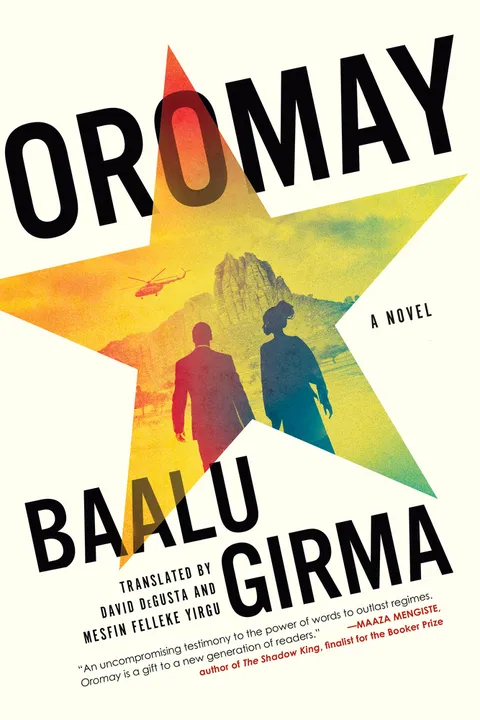
Oromay
Report an issue
Tell us what's wrong and we'll take a look.
Thanks – we got it. We'll review and follow up if needed.
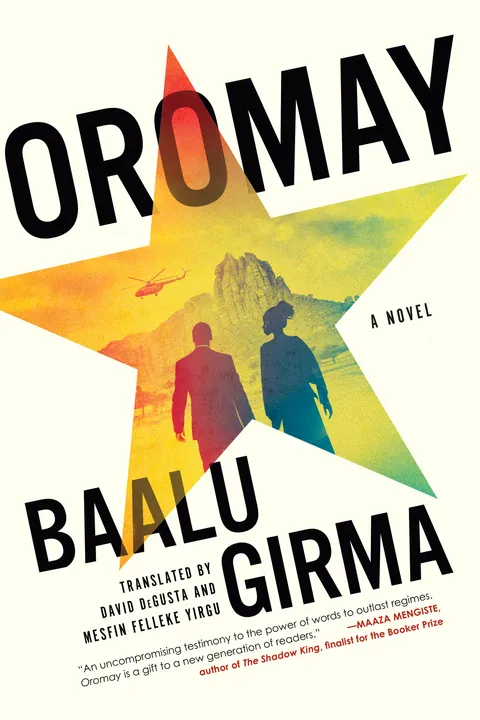
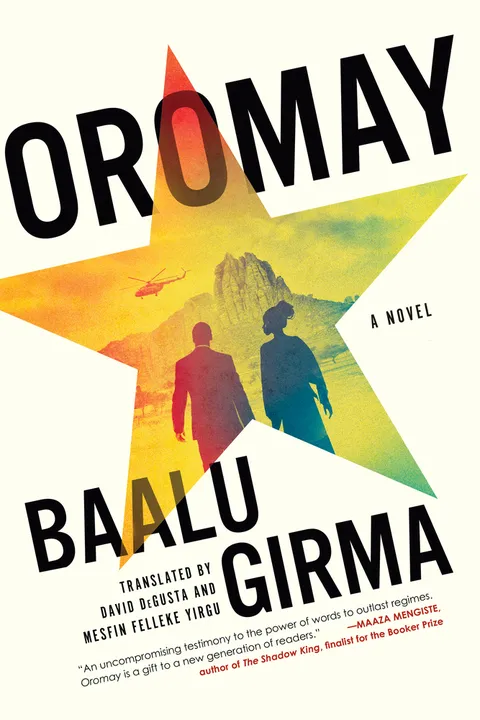
An engrossing political thriller and a tale of love and war for readers of John Le Carré and Philip Kerr.
December 1981, Ethiopia. Tsegaye Hailemaryam, a well-known journalist for the state-run media, has just landed in Asmara. He is on assignment as the head of propaganda for the Red Star campaign, a massive effort by the Ethiopian government to end the Eritrean insurgency. There, amid the city's bars and coffeehouses buzzing with spies and government agents, he juggles the demands of his superiors while trying to reassure his fiancée back home that he's not straying with Asmara's famed beauties.
As Tsegaye falls in love with Asmara--and, in spite of his promises, with dazzling, enigmatic local woman Fiammetta--his misgivings about the campaign grow. Tsegaye confronts the horror of war when he is sent with an elite army unit to attack the insurgents' mountain stronghold. In the aftermath, he encounters betrayals that shake his faith in both the regime and human nature.
Oromay became an instant sensation when first published in 1983 and was swiftly banned for its frank depiction of the regime. The author vanished soon thereafter; the consensus is that he was murdered in retaliation for Oromay. A sweeping and timeless story about power and betrayal in love and war, the novel remains Girma's masterpiece.
Baalu Girma
Born in rural Ethiopia in 1939, BAALU GIRMA graduated from Addis Ababa University and later studied journalism in the United States. He rose to prominence in Ethiopia in the 1960s and 70s as both a journalist and novelist, eventually becoming a top official in the Ministry of Information under the Derg dictatorship. He wrote six popular and critically acclaimed Amharic-language novels: Beyond the Horizon, The Bell of Conscience, The Call of the Red Star, Haddis, The Author and his final novel, Oromay. His candid portrayal of the regime in Oromay caused a sensation and the government immediately banned the novel and fired Girma. Six months later, on Valentine's Day 1984, he vanished under suspicious circumstances. No definitive evidence has emerged as to Girma's fate, but the consensus is that he was murdered by the regime in retaliation for Oromay, which has since become one of Ethiopia's most famous and best-loved novels. It is partly for his courage in renouncing the hated Derg that Baalu Girma and Oromay hold such an honoured place in Ethiopian cultural history.
David Degusta
Translated by
David DeGusta is a writer and translator based in the San Francisco Bay Area. He earned an MFA in fiction from the Iowa Writers' Workshop, where he received the 2023 Henfield Prize, and was a 2024 MacDowell Fellow. Previously, he worked as a paleoanthropologist in Ethiopia.
Mesfin Felleke Yirgu
Translated by
MESFIN FELLEKE YIRGU was born and raised in Addis Ababa, Ethiopia, with Amharic as his native language. He has been involved with the Baalu Girma Foundation since its founding and is a long-time friend of the Girma family.




Why Readwise Books?
Readwise Books is an ebook & audiobook platform that automatically logs how much you and your friends read, making it fun and easy to read more. Learn more →