Report an issue
Tell us what's wrong and we'll take a look.
Thanks – we got it. We'll review and follow up if needed.
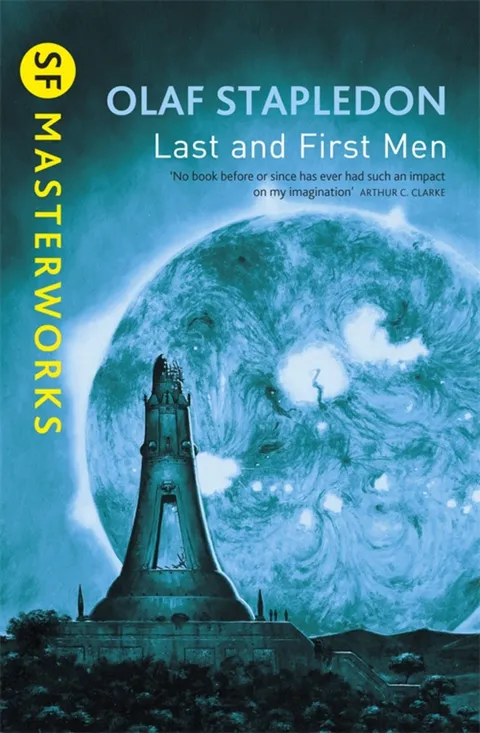
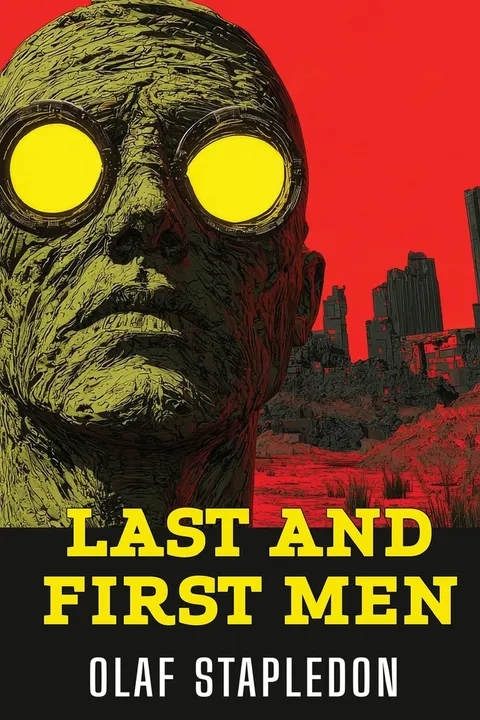
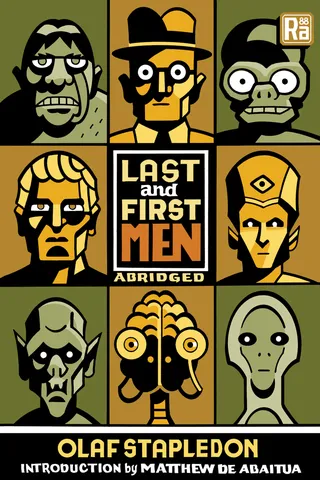
A towering landmark of philosophical science fiction, Last and First Men by Olaf Stapledon is one of the most ambitious and influential works ever written in the genre.
First published in 1930, this visionary novel presents a sweeping future history of humanity, tracing the rise, fall, and transformation of successive human species across billions of years. Rather than focusing on individual characters, Stapledon turns his gaze outward and forward, exploring evolution, civilization, consciousness, and humanity's place in the cosmos with extraordinary intellectual reach.
Blending speculative evolution, cosmic science fiction, and philosophical inquiry, Last and First Men examines how intelligence adapts to changing worlds, how societies grapple with extinction and renewal, and how moral responsibility might survive across unimaginable spans of time. Its ideas anticipated later discussions of transhumanism, post-human futures, and hard science fiction, making it a foundational text for modern speculative thought.
Praised for its originality and prophetic vision, the novel has influenced generations of writers, scientists, and philosophers, and remains essential reading for anyone interested in classic science fiction, ideas-driven speculative fiction, and the long-term future of humanity. Though challenging, the book rewards readers with a sense of awe rarely matched in literature.
A cornerstone of early twentieth-century science fiction, Last and First Men is ideal for libraries, academic collections, and readers seeking a profound, intellectually daring alternative to conventional narrative fiction.
Bold, unsettling, and astonishingly prescient, this is science fiction at its most expansive-an enduring masterpiece of human imagination.
Olaf Stapledon
Olaf Stapledon (1886-1950) was the author of many novels and nonfiction books, among them Last and First Men, Star Maker, and Odd John. Stapledon is considered one of the fathers of visionary science fiction, heir to H. G. Wells, and a major influence upon writers such as science fiction authors Arthur C. Clarke, Winston Churchill, and Nobel laureate Doris Lessing, as well as many American science fiction authors and scientists, including physicist Freeman Dyson. C. S. Lewis notably thought Stapledon “cracking good,” but was shaken by and reacted strongly to Stapledon’s dark vision. Stapledon’s novels are known for their sprawling scope, imaginative breadth, and philosophical depth, exploring themes of evolution, human consciousness, and the destiny of mankind across cosmic timescales.
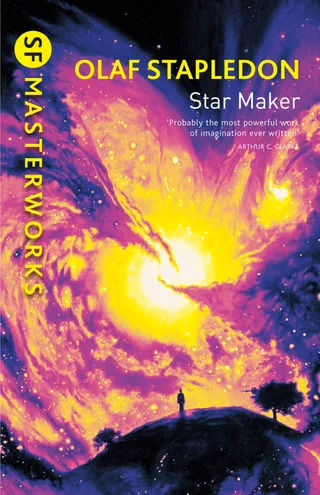
More by Olaf Stapledon


Why Readwise Books?
Readwise Books is an ebook & audiobook platform that automatically logs how much you and your friends read, making it fun and easy to read more. Learn more →