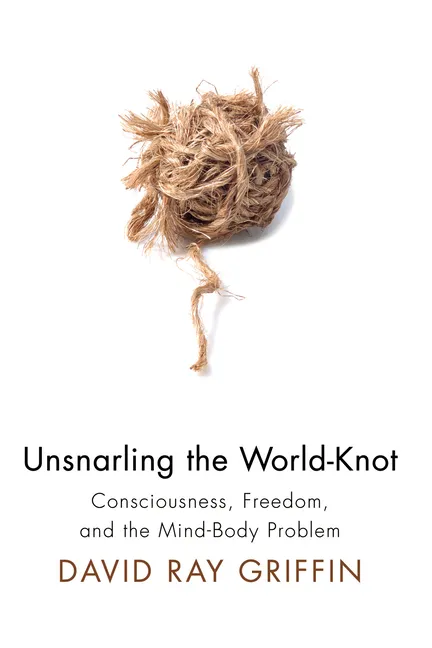
Unsnarling the World-Knot
Report an issue
Tell us what's wrong and we'll take a look.
Thanks – we got it. We'll review and follow up if needed.
The mind-body problem, which Schopenhauer called the ""world-knot,"" has been a central problem for philosophy since the time of Descartes. Among realists--those who accept the reality of the physical world--the two dominant approaches have been dualism and materialism, but there is a growing consensus that, if we are ever to understand how mind and body are related, a radically new approach is required. David Ray Griffin develops a third form of realism, one that resolves the basic problem (common to dualism and materialism) of the continued acceptance of the Cartesian view of matter. In dialogue with various philosophers, including Dennett, Kim, McGinn, Nagel, Seager, Searle, and Strawson, Griffin shows that materialist physicalism is even more problematic than dualism. He proposes instead a panexperientialist physicalism grounded in the process philosophy of Alfred North Whitehead. Answering those who have rejected ""panpsychism"" as obviously absurd, Griffin argues compellingly that panexperientialism, by taking experience and spontaneity as fully natural, can finally provide a naturalistic account of the emergence of consciousness--an account that also does justice to the freedom we all suppose in practice.
David Ray Griffin
David Ray Griffin is Professor of Philosophy of Religion at Claremont School of Theology and Claremont Graduate University. Among his many books are Religion and Scientific Naturalism: Overcoming the Conflicts; Unsnarling the World-Knot: Consciousness, Freedom, and the Mind-Body Problem; and Evil Revisited: Responses and Reconsiderations.
More by David Ray Griffin






Why Readwise Books?
Readwise Books is an ebook & audiobook platform that automatically logs how much you and your friends read, making it fun and easy to read more. Learn more →